

BAT TRANG: WHEN THE SOIL TURNS INTO ART

From the traditional pottery profession, OCOP subjects in Bat Trang (Hanoi) are gradually renewing products with creative thinking, improving quality and building brands. The combination of heritage values with market demand opens up a new development direction for Bat Trang ceramics, contributing to bringing the quintessence of the craft village closer to domestic and international consumers.
Attached to the history and cultural life of Thang Long – Hanoi, Bat Trang pottery is the crystallization of the professional experience, creativity and ingenuity of many generations of artisans. From products for daily life to decorative ceramics, fine arts and gifts, each product bears its own mark of shaping, ceramic glaze and motifs.
 |
| Bat Trang pottery village preserves traditional craft values for many generations. |
The process of making pottery requires meticulousness through the stages of shaping, decoration, glazing and firing at the right temperature. But beyond technical requirements, the value of Bat Trang pottery also lies in the ability to harmoniously combine traditional experience with contemporary aesthetic thinking. It is the long-standing craft foundation that creates conditions for production facilities, artisans and businesses in Bat Trang to develop diverse products, meeting the needs of use, decoration and cultural gifts.
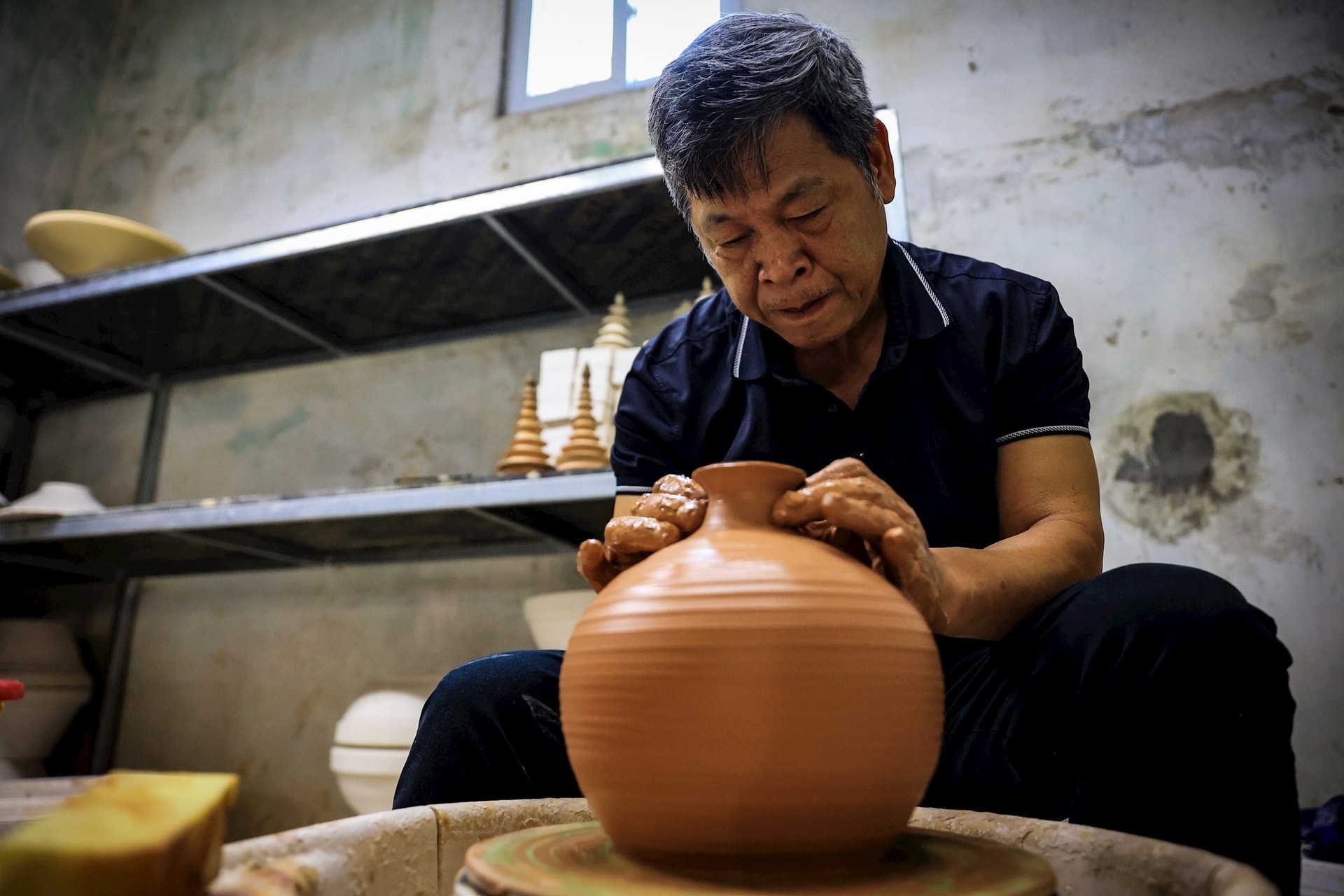 |
| With experience and skillful hands, Bat Trang craftsmen meticulously complete every detail, creating a unique feature for handmade ceramic products. |
In the process of developing Bat Trang ceramics, OCOP entities play an important role in transforming the advantages of craft villages into products with quality, identity and competitiveness in the market. Participating in the One Commune One Product Program (OCOP) is not only an opportunity for establishments to perfect products, but also sets requirements on quality standards, origin, trademarks, packaging and the ability to reach consumers. For ceramic products, this is even more meaningful when the value lies not only in the functionality but also in the aesthetics, cultural story and reputation of the craftsman.
To promote the effectiveness of the program, each OCOP subject needs to clearly identify customer segments, build a brand identity and develop appropriate product lines. Products with Hanoi cultural imprints, with exquisite designs and transparent information, can create advantages in the gifts, interior decoration, souvenir products and gifts for tourists.
Therefore, OCOP should not stop at completing documents or achieving evaluation rankings, but should become a motivation for subjects to improve management capacity, maintain stable quality and expand the market. The correct use of the OCOP trademark, clearly introducing the origin and updating product information also contributes to strengthening customer trust.
In the face of changes in consumer tastes, traditional ceramic products need to be developed in the direction of both maintaining their identity and meeting modern needs. Improvements in style, size, enamel color, function and packaging can help products reach more customer groups without losing the characteristics of the craft village.
Along with design innovation, digital transformation opens up more opportunities for OCOP entities to promote products, tell brand stories and connect customers beyond the local scope. High-quality images, clear product information, online sales and presence on appropriate distribution channels will contribute to expanding market access.
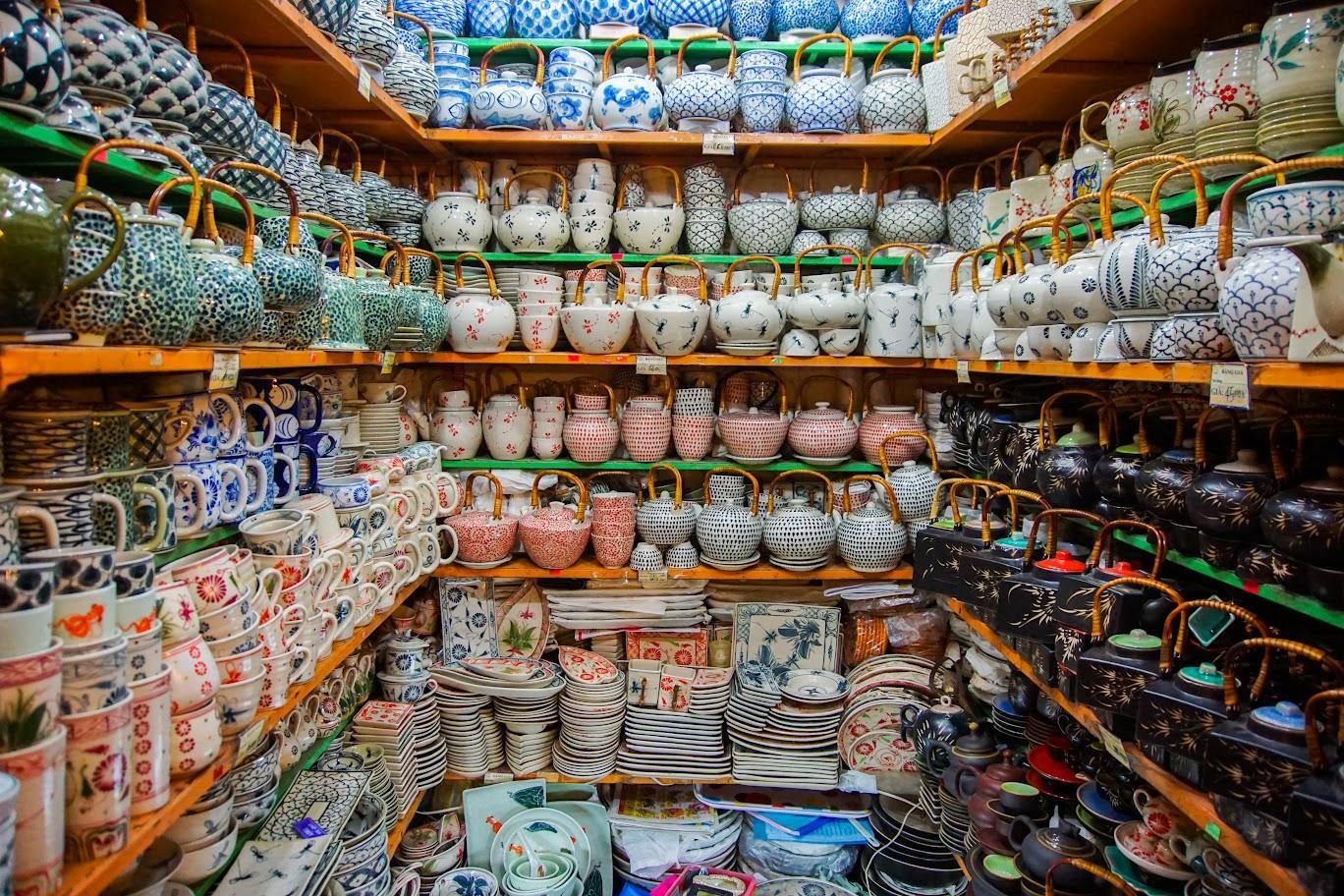 |
| Bat Trang pottery display space introduces the diversity of designs, patterns and functions of craft village products. |
Experiential tourism is also a potential direction. When visitors learn about the history of craft villages, observe artisans making pottery and directly experience some appropriate stages, products are not only goods to be bought and sold but also become cultural memories. The connection between craft villages, tourism and OCOP products can create more value for both producers and local communities.
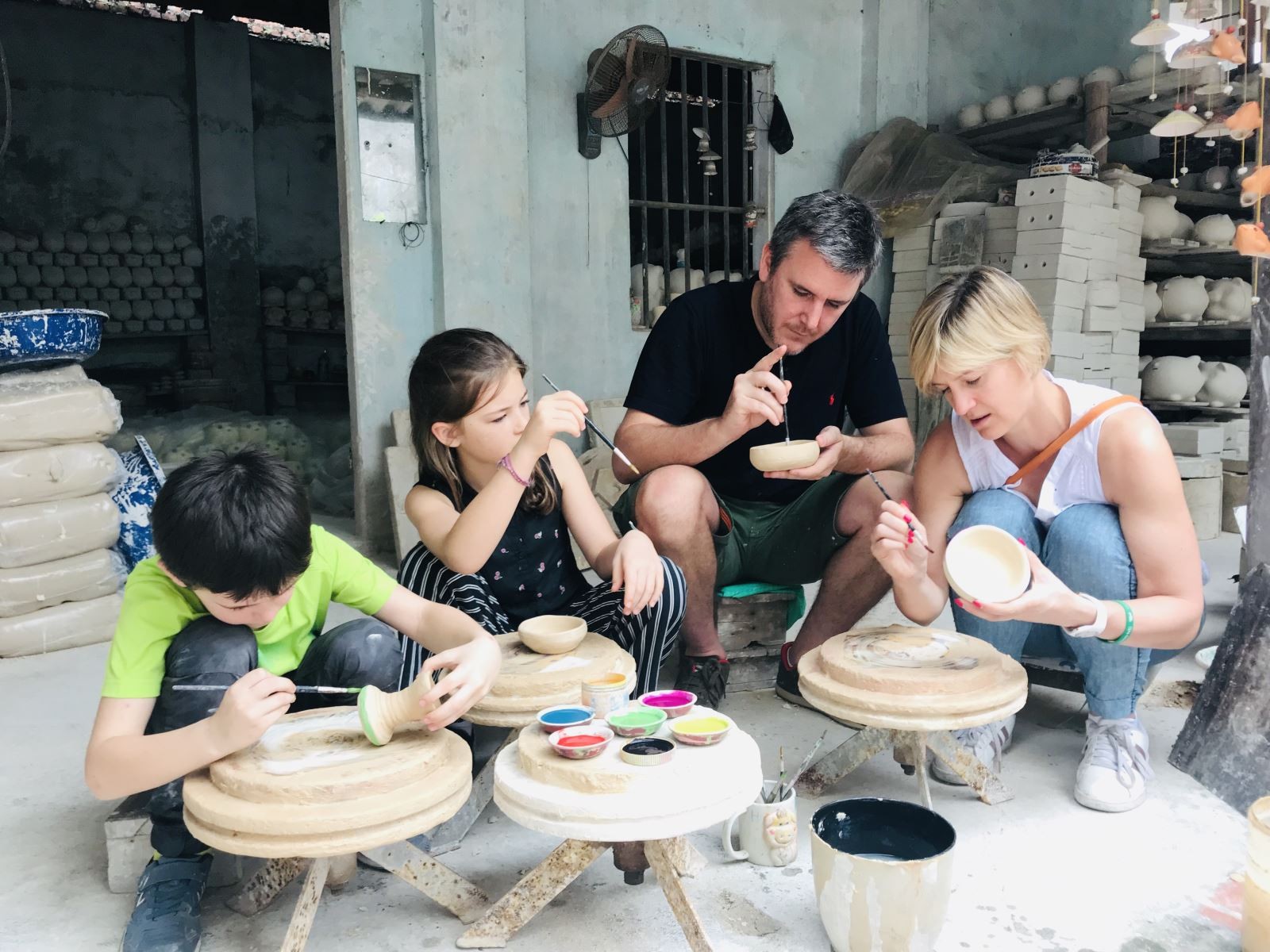 |
| The pottery making experience activity helps visitors directly explore handicraft techniques, better understand the labor of workers and the cultural values of Bat Trang craft village. |
However, for sustainable development, entities need to focus on training the next generation, improving the quality of human resources, controlling product quality and actively looking for distribution partners. The coordination between artisans, businesses, trade promotion units and management agencies will contribute to creating a favorable environment for traditional ceramic products to develop in a professional direction.
From the value accumulated over many generations, Bat Trang pottery is having more opportunities to enter new consumer spaces. When OCOP takes quality as the foundation, cultural identity as an advantage and market as the development orientation, each ceramic product not only contributes to creating livelihoods but also becomes a vivid representative of the quintessence of Hanoi's traditional crafts.
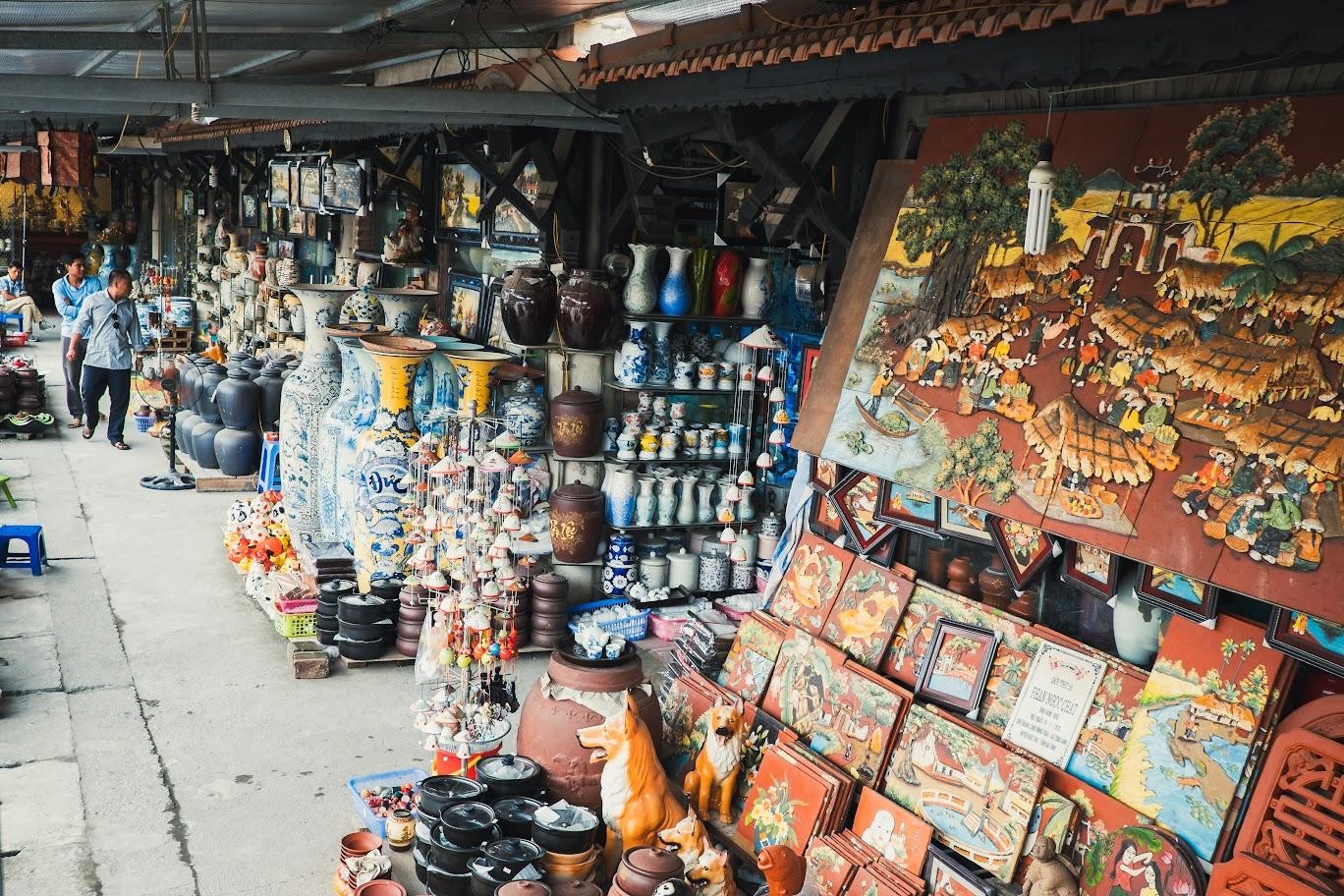 |
| Bat Trang pottery display space introduces the diversity of designs, patterns and functions of craft village products. |
Tin khác


