

Cu do Ha Tinh - When molasses, lac rang tells the story of the village

The quintessence is in each stage
The most attractive point of cu do lies not only in the taste, but in the processing process itself – where the technique, experience and delicate feel of the craftsman blend together almost instinctively.
A delicious batch of candies starts with firm, carefully selected peanuts, roasted evenly by hand to retain their natural crispiness and fleshy taste. At the same time, pure molasses - the ingredient that makes up the "soul" of cu do – is cooked with finely pounded fresh ginger. The flame is not too big, not too small, but must be "just enough", because just a little deviation, the honey will burn or not reach the necessary consistency.
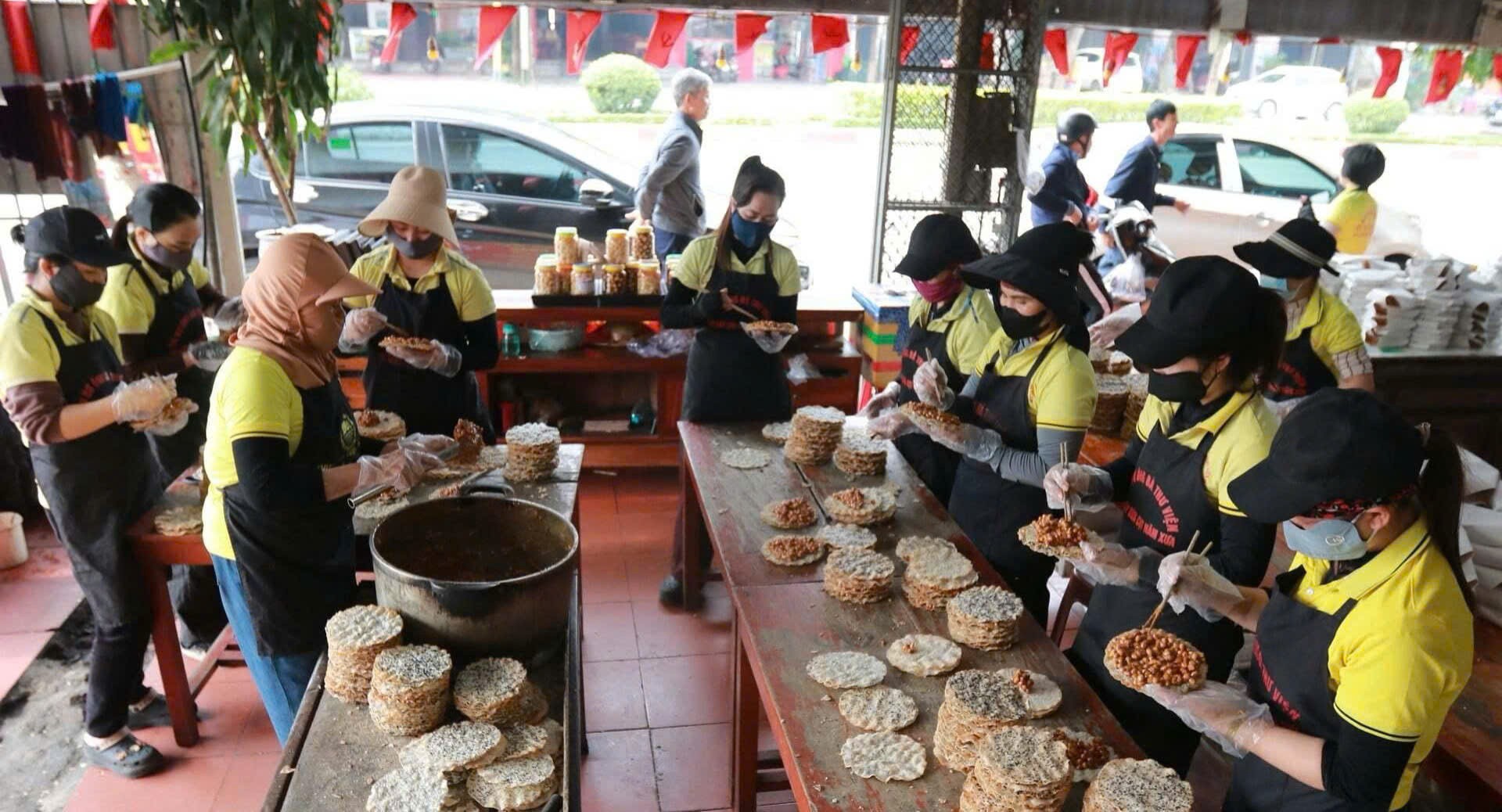 |
| The artisan carefully selects, roasts peanuts, and prepares the ingredients to create the distinctive flavor of Ha Tinh cu do candy. Photo: Dan Viet. |
The process of making candy is the most important part, as well as the biggest challenge for the profession. Without a precise recipe by machine, the worker must "read" the state of the candy through color, boil, and scent. When the honey begins to turn the color of cockroach wings, bubbling small and exuding a strong aroma, that's when the peanuts are poured in. All must be done quickly, evenly, stirring and stirring the fire so that each peanut seep evenly absorbs the honey.
When the mixture reaches plasticity - sticky enough but not too hard – the worker immediately scoops out the candy and spreads it evenly on a layer of rice paper sprinkled with sesame. This is a moment that requires absolute precision: one beat slow, the candy will solidify; too fast, the shape will be irregular. The top layer of rice paper is laid down as soon as the candy is hot, lightly pressed to form an even round candy.
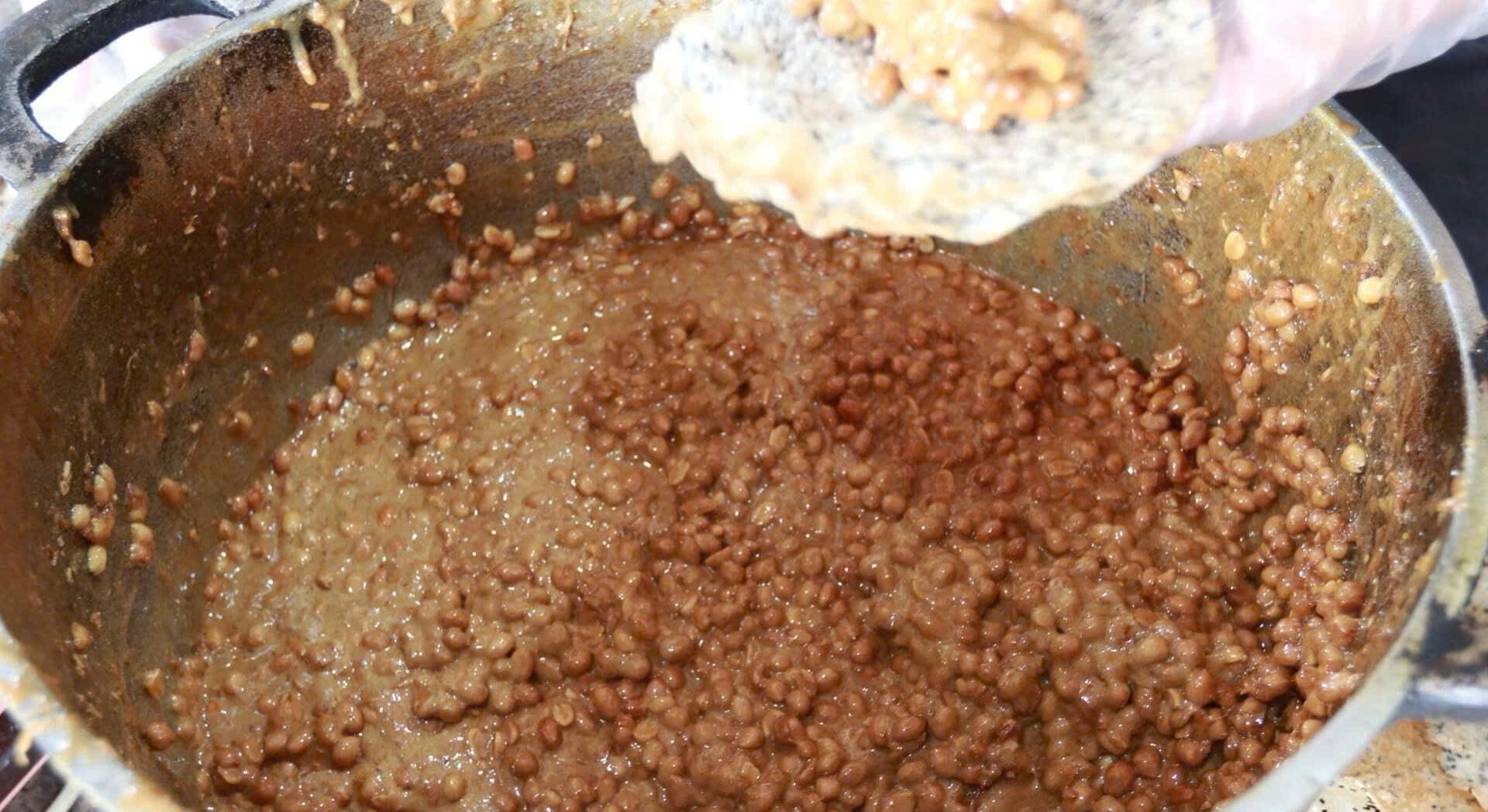 |
| The craftsman meticulously stirs the mixture of sugarcane molasses and roasted peanuts over an open fire, preserving the traditional flavor of cu do. Photo: Dan Viet. |
A standard cu do must have all the nuances: a crispy rice paper, a moderately chewy candy filling, peanuts, sweet molasses that are not harsh, and the warm spicy aftertaste of ginger spreads slightly in the throat. That taste is not only created from ingredients, but also from the ingenuity and experience accumulated over many generations.
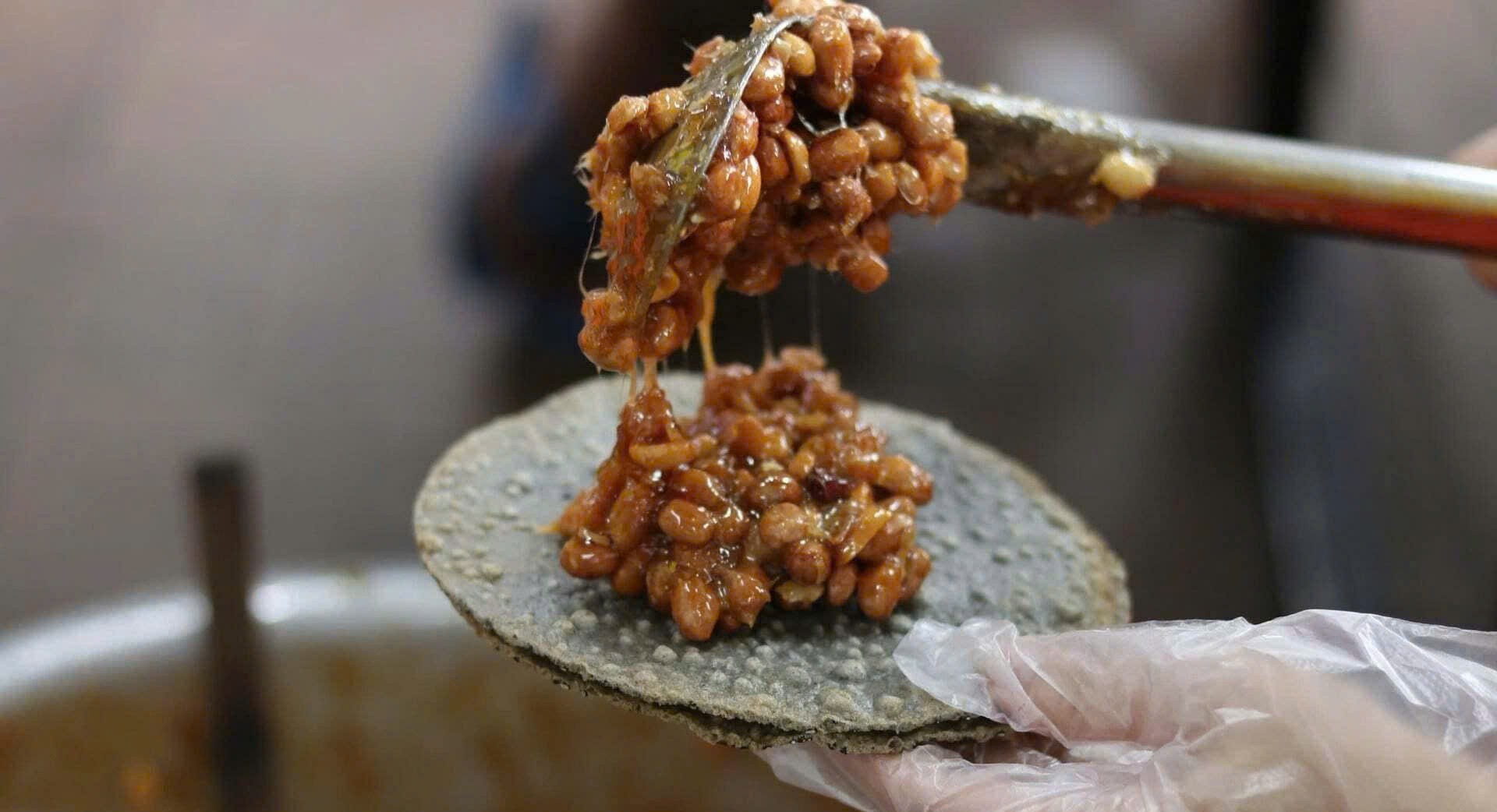 |
| Each piece of cu do is meticulously handcrafted, perfectly combining a crispy rice paper layer, rich peanuts, and the gentle sweetness of sugarcane molasses. Photo: Dan Viet. |
Keeping the soul of the country in the flow of the market
For many years, cu do existed as a gift from the countryside, associated with memories more than commercial value. People buy cu do at roadside stalls, bring them back as gifts, enjoy with a cup of hot tea on days when the Lao wind blows strongly.
But when the OCOP program opened, this product began to enter a different journey. Production facilities, typically such as Le Phuong cu do candy, have invested in improving the production process, bringing supporting machinery into stages such as candy cooking, cleaning raw materials, packaging while still maintaining the "core" manual stage.
The product packaging is redesigned, the label is clear, and traceable, helping the cu do no longer be an anonymous gift from the countryside but become a branded product. As a result, cu do candy has gradually appeared at airports, tourist stops, supermarkets and modern distribution channels.
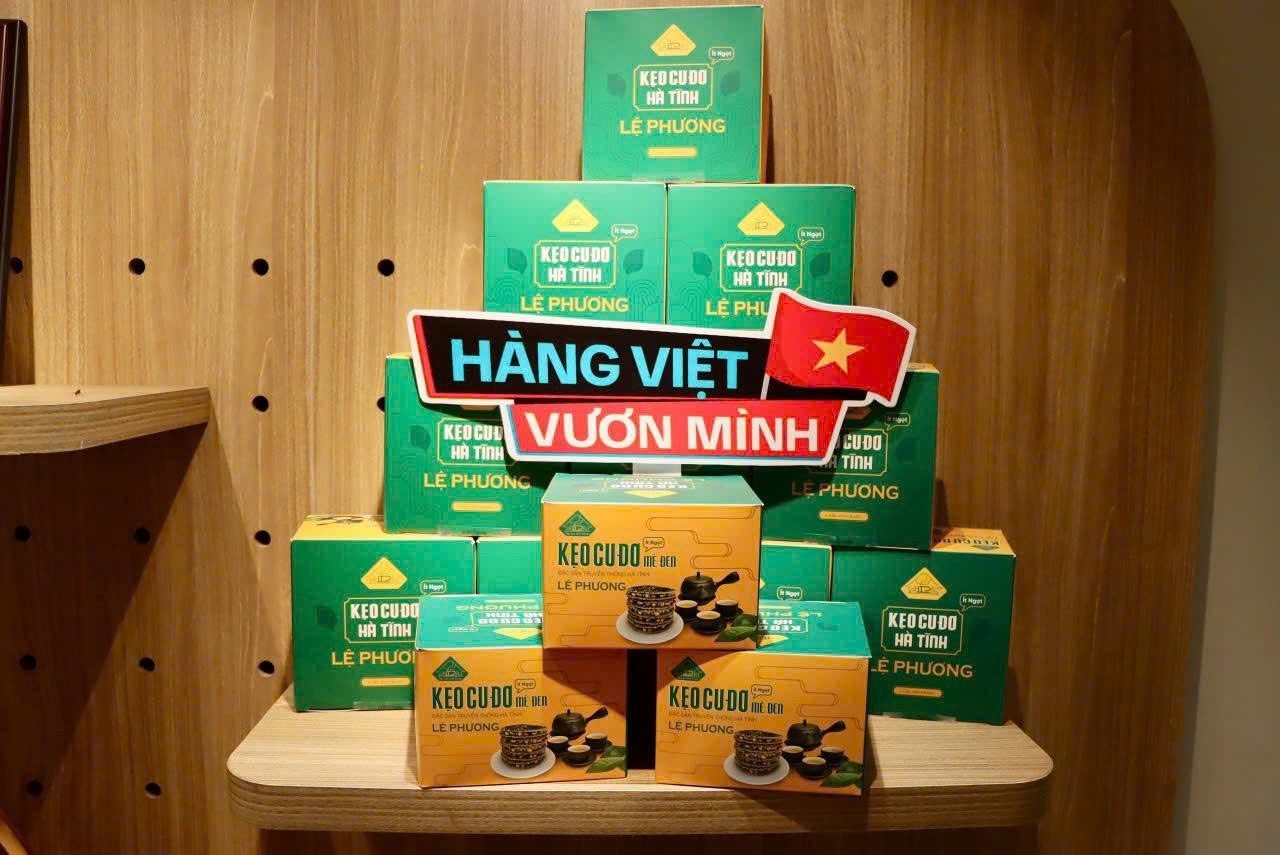 |
| The OCOP product - Le Phuong cu do candy - displayed at exhibition booths. |
Notably, this development not only helps expand the market but also creates stable jobs for many local workers, contributing to keeping traditional jobs in the context of many rural industries disappearing.
From rustic specialties to sustainable values
Despite stepping into the big market, Ha Tinh still faces many challenges. The increasing demand for quality, design, and brand requires production facilities to continuously innovate. At the same time, balancing scaling and keeping the traditional flavor is always a difficult problem.
However, it is this journey that makes the special value of the product. Cu Do has not become a mass industrial candy, but retains its own "countryside", from the way of choosing ingredients to the rhythm of making candy by the fire.
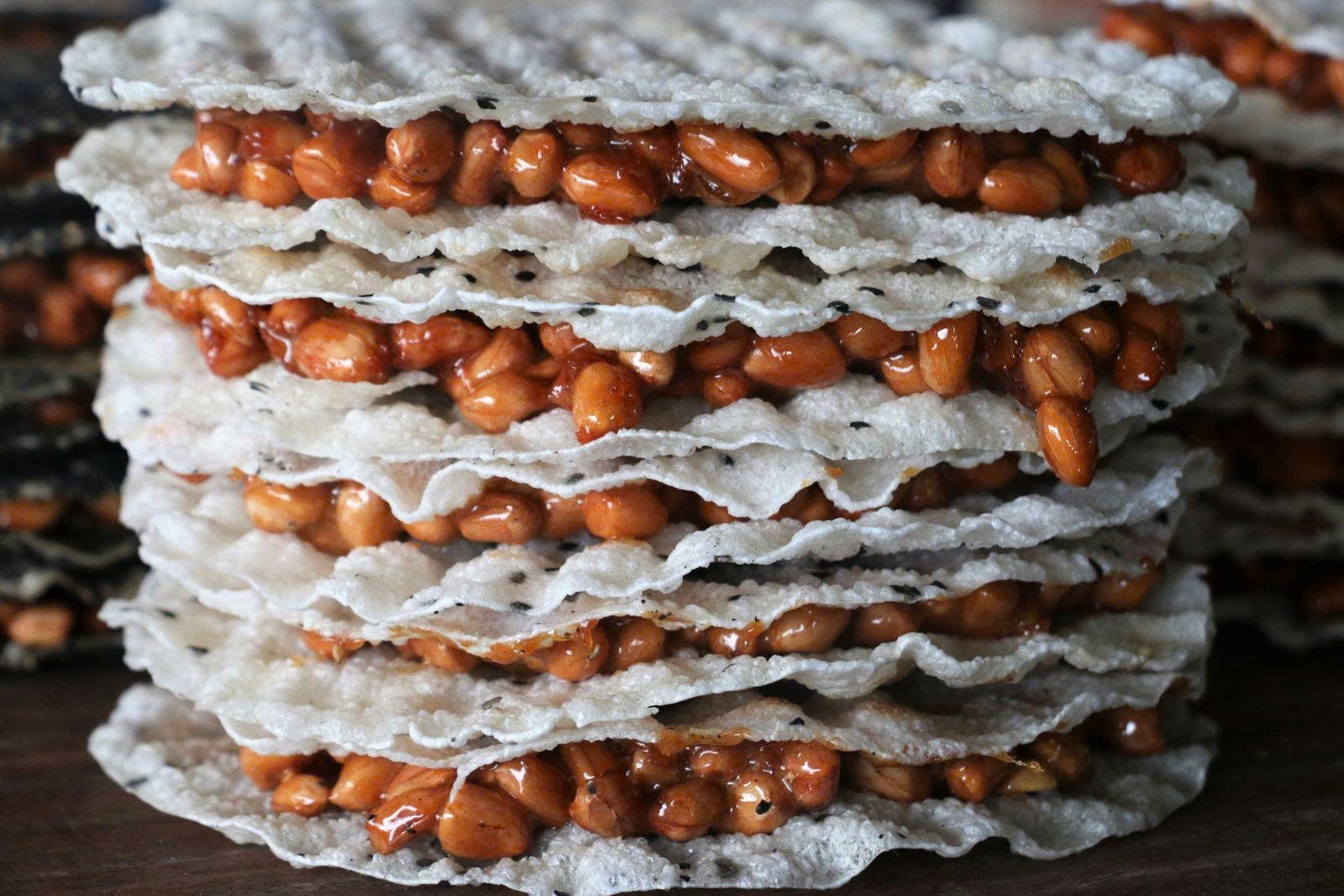 |
| From simple ingredients like peanuts, sugarcane molasses, and fresh ginger, the artisans create a product that carries the strong cultural imprint of the countryside. |
In the flow of the modern economy, Ha Tinh is proving that a traditional product can completely survive and develop, if it knows how to harmoniously combine conservation and innovation. From the simple ingredients of the village, through the skillful hands of the craftsman, cu do is not only a dish, but a part of memory, part of culture. And now, the product has become an important part of the local economy.
That is also the journey that many OCOP products are pursuing: not leaving the roots, but finding ways for traditional values to continue to live and spread in a world that is changing day by day.
Tin mới hơn


Tin khác


