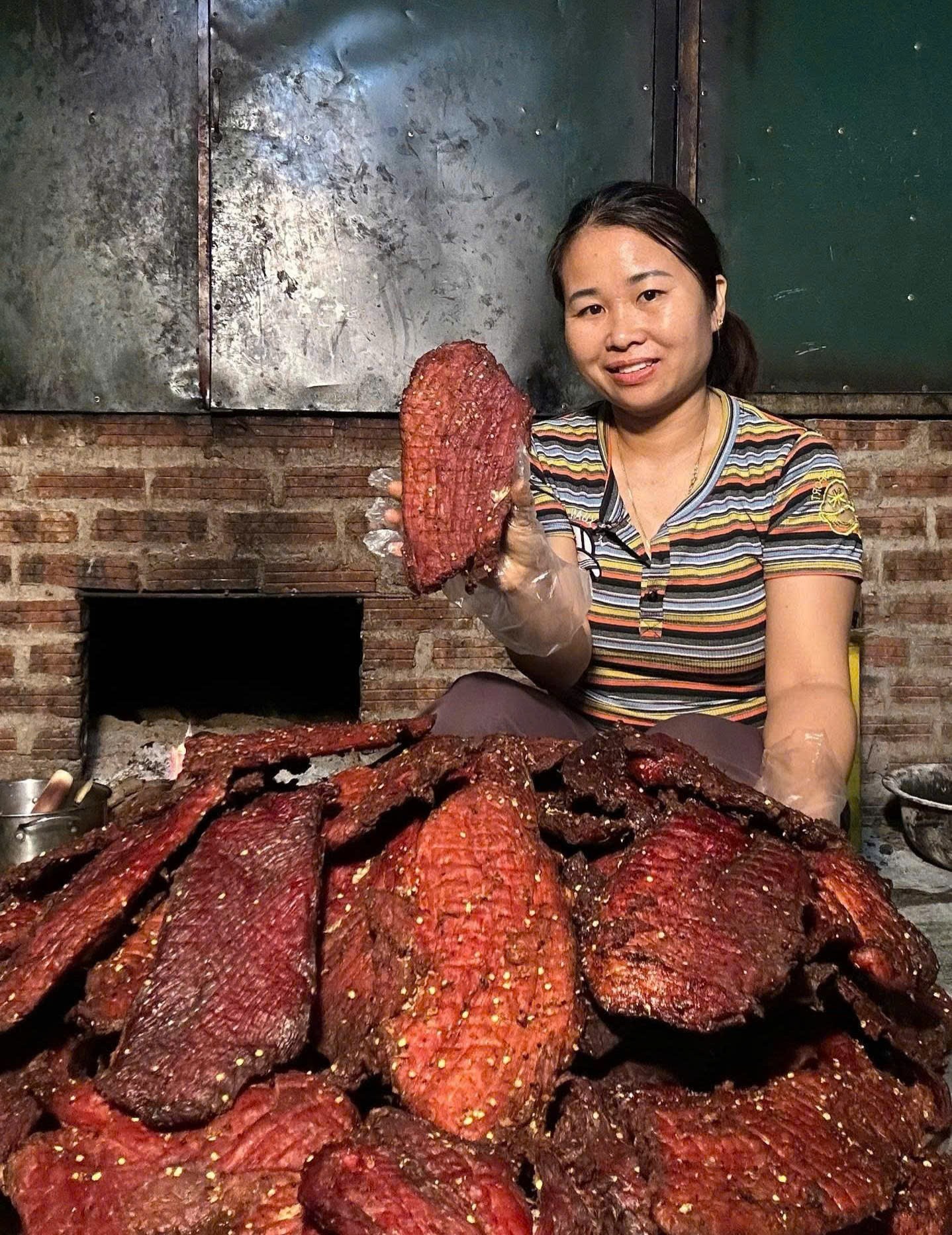
Thai people in Dien Bien keep the culinary soul with OCOP products

OVN - From the simple ingredients of the mountains and forests of the Northwest, the Thai people in Dien Bien have created dishes with their own flavors that cannot be mixed. Over time, specialties that were only present in family meals have now been standardized, branded and put on the OCOP "passport". It is not only a story of raising the level of local products, but also a journey to bring national cultural identity to a wider market.

Kitchen smoke holds the taste of the mountains and forests

One summer afternoon, in the kitchen of Ms. Deo Thi Thoai's family, Dien Bien Phu ward, strips of buffalo meat were neatly hung on the drying rack. The smell of macadamia mixed with the smell of longan wood smoke spreads throughout the space, evoking a sense of familiarity of Thai kitchens in highland villages.

The Thai people in Dien Bien have long been famous for the art of preparing smoked dishes and guarding the kitchen. Pieces of buffalo meat, beef, and pork after being elaborately marinated with typical spices such as mackerel, doi seeds, ginger, garlic, and wild peppers will be simmered on a wood stove for many hours to create their own unique flavor that cannot be found anywhere else. It is not just a way of preserving food in mountainous conditions before, but gradually becoming a unique culinary culture associated with community life.

Stemming from her love for these traditional dishes, in 2018, Ms. Deo Thi Thoai started making dried buffalo meat to sell to the market. "The first day of work is only based on the experience of the family. After that, I had to learn a lot more, try the spice recipe over and over again, the drying time to find my own flavor," Ms. Thoai said.

According to her, the secret lies right from the selection of ingredients. The meat should be the corn or buttocks of healthy, long-grained, low-ribbed buffaloes. When slicing, it must be cut along the grain so that the meat after drying is both beautiful and easy to tear.

However, the decisive factor in the soul of the dish lies in the familiar spices of the mountains and forests of the Northwest. Fragrant macadamia seeds, small but rich flavor seeds, ginger, garlic, and dried chili peppers are finely pounded and then evenly moistened on each fiber of the meat. After a sufficient marinating time, the meat is put on a drying rig with longan wood.

Many years of working in the profession helped Ms. Thoai realize that longan wood generates stable heat, less smoke but still retains its natural fragrance. That's what makes the product different.

After 5 years of perseverance in the profession, the product "Kim Thoai Buffalo Meat" was recognized as 3-star OCOP.

Thai people in Dien Bien keep the culinary soul with OCOP products

"Kim Thoai Kitchen-Smoked Buffalo Meat" is a 3-star OCOP product of Điện Biên Phủ Ward.

From a familiar dish in every Thai family, buffalo meat in the kitchen is now present in many provinces and cities across the country. Many tourists when coming to Dien Bien have come to the production facility after watching introductory videos on social networks to buy as gifts to take home.

Currently, among the 125 3-star OCOP products of Dien Bien province, there are up to 20 products in the group of dried buffalo meat, dried beef, kitchen pork and smoked ribs. This shows the strong vitality of Thai national culinary culture in modern life.

Traditional flavors find their way through the village

In the Northwest provinces, kitchen meat is considered a gift of the mountains and forests, while the occipital is the soul of Thai meals. In any rice tray of the Thai people, from daily meals to solemn occasions, people can see a diagonal occipital bowl placed in the middle of the tray.

That seemingly simple spice contains a treasure trove of folk knowledge that has been passed down from generation to generation. From salt, chili peppers, garlic, macadamia, doi seeds to lemon leaves, each ingredient is mixed in its own proportions to create a characteristic spicy, aromatic and rich taste.

Realizing that more and more people love this spice, Ms. Dieu Thi Sam, Tua Chua commune has boldly researched to make diagonal occipitals a commodity product. The early days were a series of non-stop experimental times. Some batches are too spicy, some batches are not prominent enough. Every failure is an adjustment to the formula.

After many months of research, Ms. Sam created the product "Wet Diep Dieu Ginseng" with its own flavor and was well received by consumers. At the end of 2023, the product will officially be recognized as a 3-star OCOP.
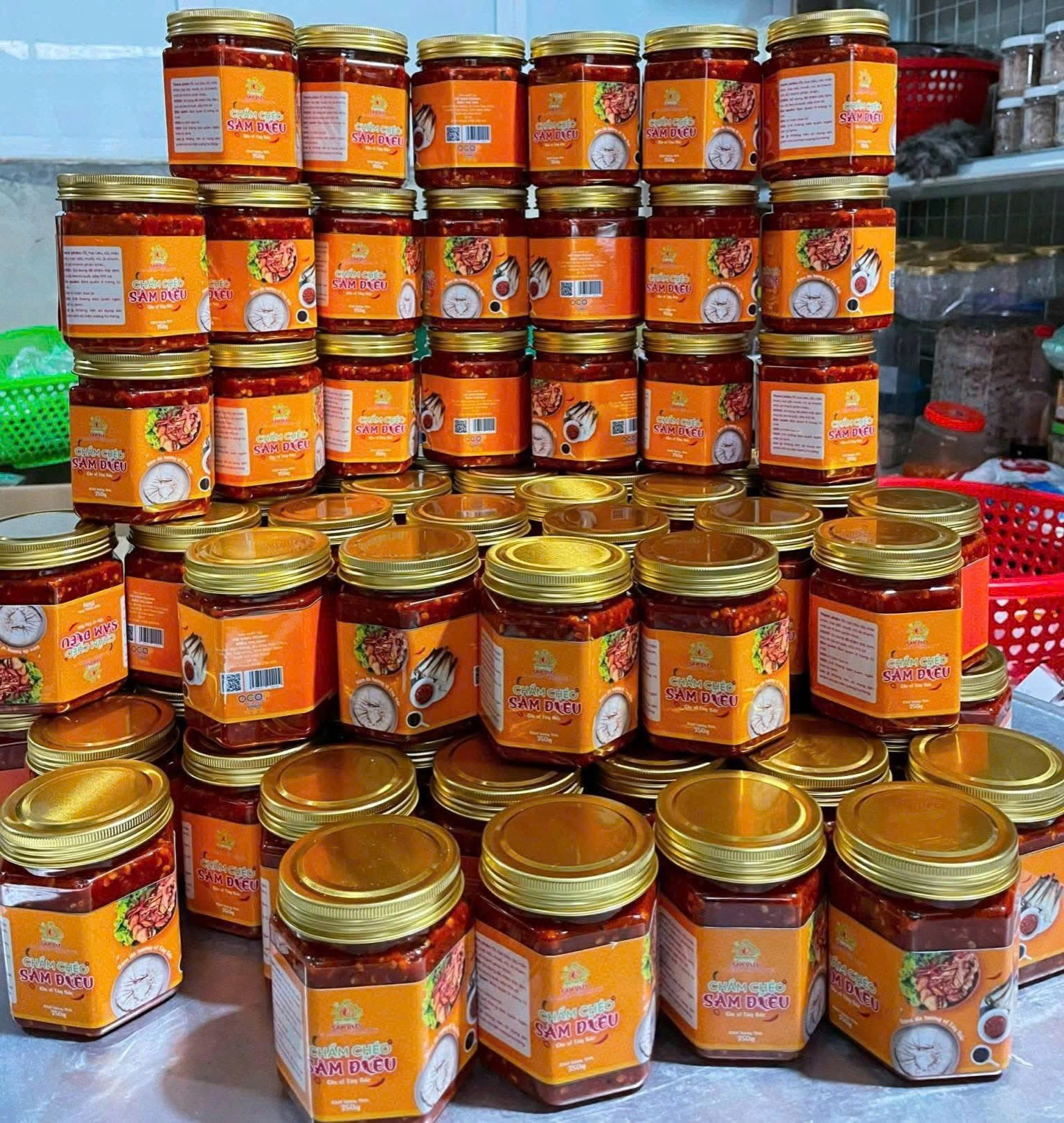
Thai people in Dien Bien keep the culinary soul with OCOP products

The product "Sam Đieu Wet Chili Dip" was awarded 3-star OCOP status in 2023.

What makes Ms. Sam happiest is not the increase in sales, but the fact that more and more people know about the culinary culture of the Thai people. Through promoting communication on social networks, cross occipital jars from the highlands of Dien Bien have been present in many provinces and cities, especially popular with customers in the South.

Not stopping at online sales, Ms. Sam also brings products to participate in trade promotion fairs in Hanoi, Hai Phong, Hung Yen, Thai Nguyen and international trade programs.
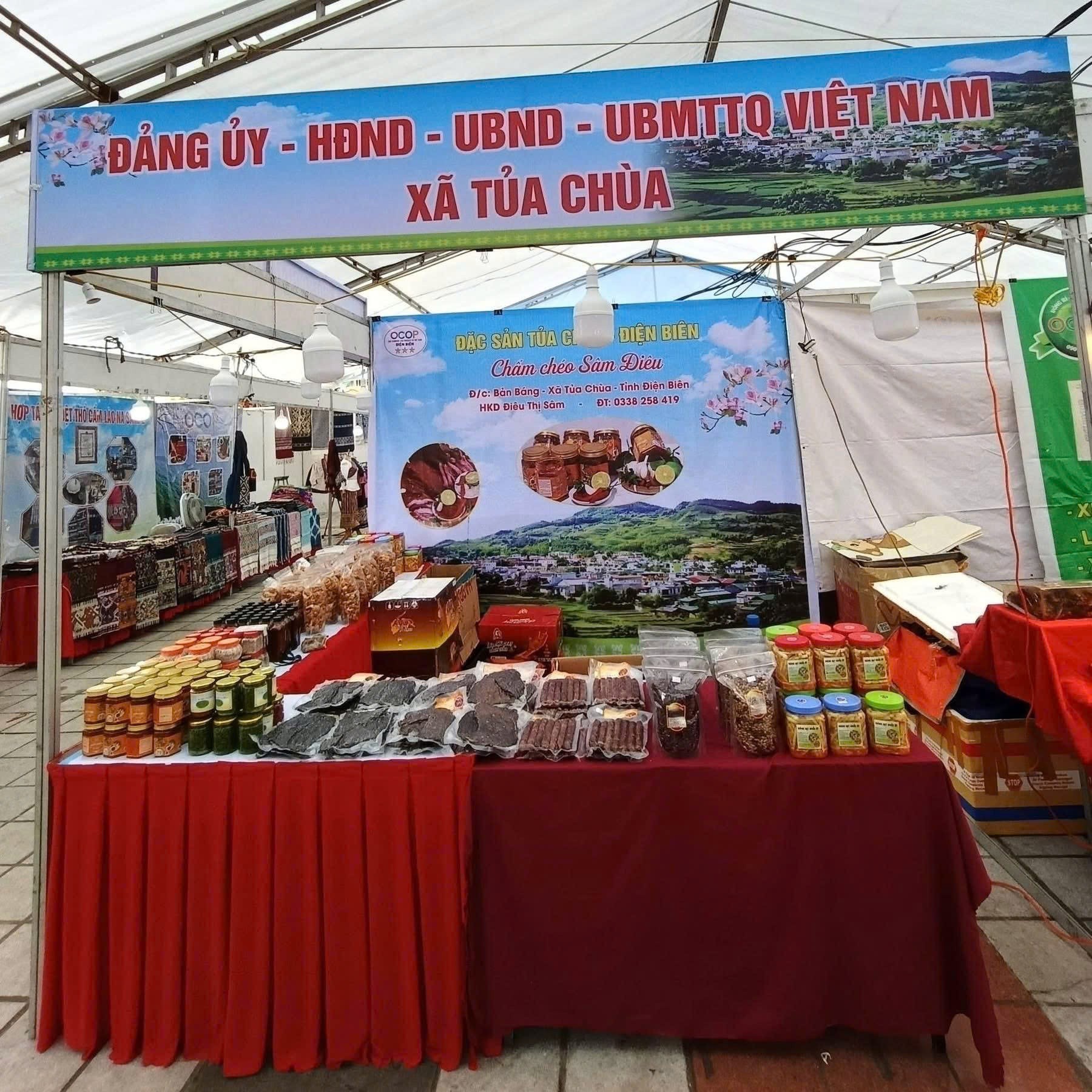
Thai people in Dien Bien keep the culinary soul with OCOP products

The OCOP product "Sam Đieu Wet Chili Dip" was displayed at the Tua Chua Commune booth at the Đien Bien Province Trade Promotion Fair in 2026.

Taking identity away

Nowadays, the dishes that used to be attached to the kitchen of Thai people are no longer only present on holidays, Tet or family meals. Thanks to the OCOP program, buffalo meat in the kitchen, smoked ribs or diagonal pork has gradually become commodity products imbued with local culture, contributing to creating livelihoods for people in the highlands.

Moreover, in the process of commercialization, many production facilities still persist in preserving the traditional processing know-how passed down through generations. From the selection of ingredients, the blending of spices to the drying method, all carry their own imprint of Thai culture.
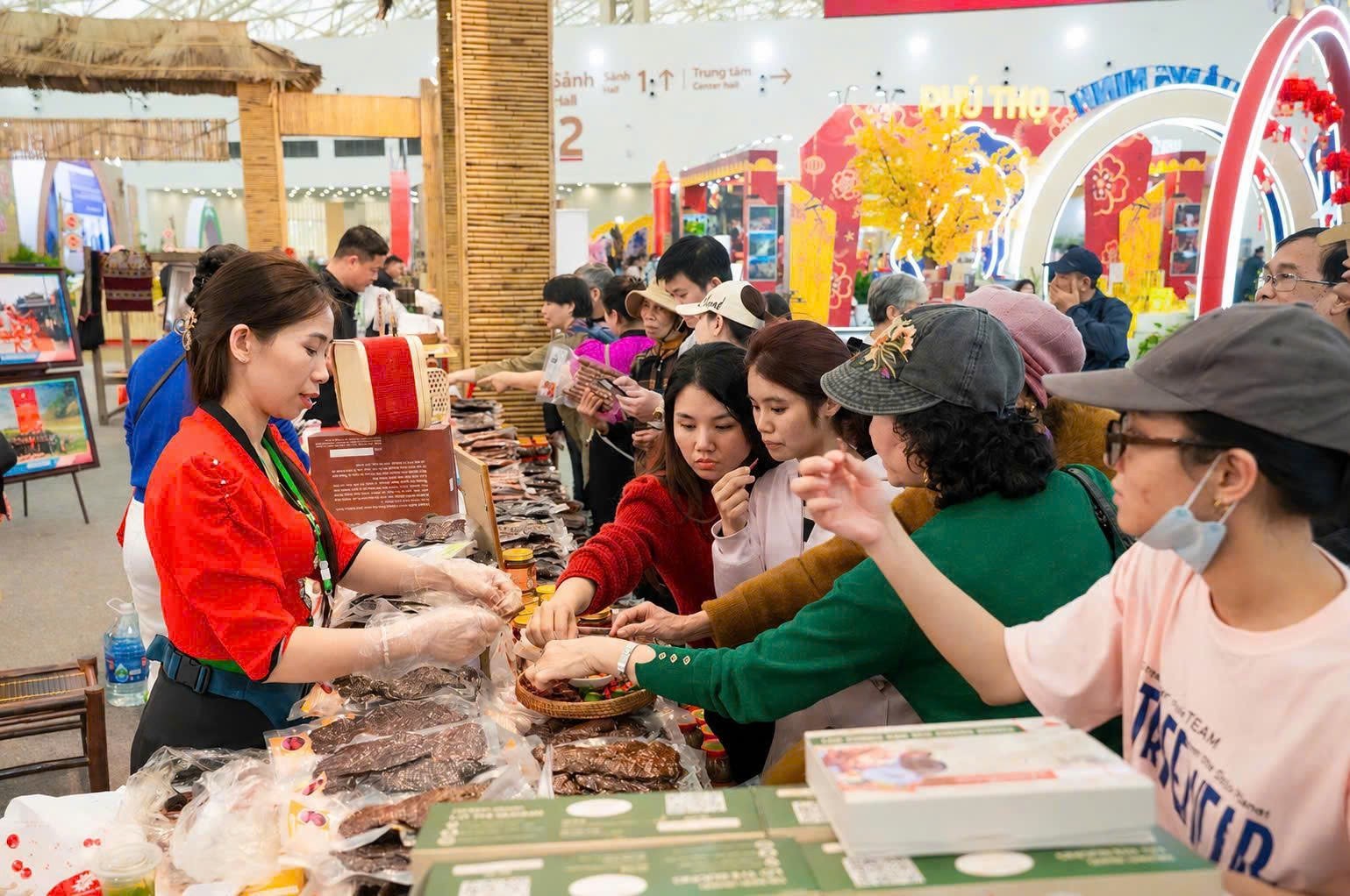
Thai people in Dien Bien keep the culinary soul with OCOP products

Ms. Đieu Thi Sam introduced various types of chili dips and kitchen-smoked dried meats to customers at the First Spring Fair held in Hanoi.

Each OCOP product of Dien Bien is increasingly improved in both quality and quantity. They not only have economic value but also contain a story about culture, a land, a community and customs that have been cultivated over time.

When reaching consumers, these specialties contribute to promoting the image of Dien Bien, and at the same time create more motivation for people to continue to preserve and promote traditional cultural values in modern life.

Moc Thach

Tin liên quan

Tin mới hơn

From rustic food to high-value goods
OVN - From rustic dishes attached to people's daily meals, many specialties of Thanh Hoa such as shrimp paste, Ai village sauce, bamboo shoots, thorn cakes or lam tea... are gradually stepping out of the village space to become high-value commodity products.
Arabica Son La: Building a coffee brand from the green value chain
OVN - From the largest raw material area in the country, Son La Arabica is entering a new stage of development. In the global trend of sustainable consumption, product provenance and environmental responsibility, coffee brands are no longer determined by taste alone, but also by the story behind each coffee bean. Therefore, Son La is choosing the path of building a brand from the green value chain.
Cu do Ha Tinh - When molasses, lac rang tells the story of the village
OVN - In the midst of the sunny and windy Central region, where the land is harsh but the people are rich in energy and sophistication, Cu Do candy was born as a testament to the way Ha Tinh people distill each simple ingredient to create an unmistakable taste. From a rustic hometown gift, today's cu do is stepping out of the village space, becoming an OCOP product with bold cultural imprints and clear economic potential.
Thai people in Dien Bien keep the culinary soul with OCOP products
OVN - From the simple ingredients of the mountains and forests of the Northwest, the Thai people in Dien Bien have created dishes with their own flavors that cannot be mixed. Over time, specialties that were only present in family meals have now been standardized, branded and put on the OCOP "passport". It is not only a story of raising the level of local products, but also a journey to bring national cultural identity to a wider market.

Tin khác

10,000 hands connected: A Vietnamese record from the heart of the Northwest
In the middle of the first days of the new year, by the deep blue Da Giang river, Muong Lay burst into a bustling summer festival atmosphere. The hands clenched together, the endlessly extended circles like the flow of culture never rested. It is not only a record, but a declaration of the solidarity of 19 ethnic groups on the land of Dien Bien.
Sung village: Weaving brocade, weaving livelihoods for Dao Tien women
OVN - In Sung hamlet, Cao Son commune, Dao Tien brocade sheets are not only a cultural identity but also a stable source of livelihood for 12 women, including people with disabilities and difficult circumstances. From a traditional profession that once faced the risk of death, the Dao Tien brocade cooperative group (THT) has been "revived" thanks to its association with community tourism, bringing in hundreds of millions of VND in revenue per year.
Hoa dã quỳ Điện Biên: Tiềm năng OCOP từ mỏ vàng chưa được khai phá
OVN - Những triền đồi Điện Biên khoác lên mình sắc vàng rực rỡ của hoa dã quỳ. Vẻ đẹp thiên nhiên ấy không chỉ dừng lại ở ngắm nhìn, mà đang mở ra cơ hội lớn để Điện Biên phát triển chuỗi sản phẩm OCOP từ du lịch cộng đồng, sản phẩm chế biến đến dịch vụ trải nghiệm.
Công nghệ cao: Cuộc đại chuyển mình của nông nghiệp Sơn La
OVN - Không còn là những mùa vụ phụ thuộc hoàn toàn vào nắng mưa, nông nghiệp Sơn La đang vận hành bằng nhà màng, dây chuyền chế biến và các quy trình kỹ thuật chuẩn hóa. Hành trình chuyển mình từ canh tác truyền thống sang sản xuất ứng dụng công nghệ cao gắn với công nghiệp chế biến đã tạo nên một diện mạo hoàn toàn mới cho kinh tế nông nghiệp nơi đây. Sự chuyển mình ấy không đến trong một sớm một chiều. Nó bắt đầu từ những chủ trương lớn, từ các nghị quyết được cụ thể hóa bằng quy hoạch, cơ chế và nguồn lực. Khi chính sách mở đường, công nghệ đã có lối để đi vào ruộng đồng.
Phú Thọ: Khi hợp tác xã “lên đời” nhờ số hoá
Trong dòng chảy của kinh tế số, chuyển đổi số không còn là câu chuyện dành riêng cho doanh nghiệp lớn. Ở khu vực nông thôn, nhiều hợp tác xã nông nghiệp tại Phú Thọ đang cho thấy khi tư duy thay đổi, công nghệ có thể trở thành đòn bẩy giúp mô hình sản xuất truyền thống bứt phá mạnh mẽ.
OCOP Lào Cai chuyển mình với tư duy xanh và thương mại số
Không còn dừng ở câu chuyện “mỗi xã một sản phẩm”, Lào Cai đang đặt tham vọng lớn hơn cho chương trình OCOP: biến nông sản bản địa thành hàng hóa có sức cạnh tranh bằng tư duy xanh, công nghệ số và chuỗi giá trị bền vững. Từ những vùng chè trên núi cao, những cơ sở chế biến dược liệu, mật ong, miến đao hay thổ cẩm của đồng bào dân tộc… tất cả đang được đưa lên sàn thương mại điện tử, truy xuất nguồn gốc bằng mã số, mã vạch và bước vào cuộc chơi mới của thị trường hiện đại.
Cánh đồng ‘lên sóng’: Điện Biên đưa nông sản bản địa lên ‘chợ số’
Giữa cái nắng đầu hè phủ lên cánh đồng ở xã Thanh An (Điện Biên), những ruộng khoai vừa vào vụ thu hoạch bỗng trở thành nơi diễn ra một “phiên chợ số” đặc biệt. Xen giữa màu đất đỏ và những sọt nông sản mới nhổ là ánh đèn livestream, tiếng chào bán hàng rộn ràng cùng sự xuất hiện của các TikToker, KOL, KOC nổi tiếng. Lần đầu tiên, những người nông dân vốn quen với ruộng đồng, cuốc xẻng lại cùng các nhà sáng tạo nội dung đứng chung một khung hình để kể câu chuyện về nông sản Điện Biên theo cách hoàn toàn mới.
Chương trình OCOP Quảng Trị thúc đẩy phát triển nông thôn
LVN - Sau 6 năm, thực hiện chương trình mỗi xã một sản phẩm (OCOP) tỉnh Quảng Trị có 372 sản phẩm, nâng cao chất lượng, mở rộng thị trường trong và ngoài nước thúc đẩy xây dựng nông thôn mới.
Đưa cá kho của nông dân Hải Phòng thành sản phẩm OCOP chất lượng
LVN - Ngoài năm mươi tuổi mới bắt đầu tập nuôi, thả tôm, cá... trải qua nhiều khó khăn vấp ngã, Anh Ngô Văn Đón, xã Việt Khê, thành phố Hải Phòng đã dần có những thành công nhờ việc nuôi cá trạch, cá trê, sau đó chế biến thành cá kho, đưa sản phẩm đến tận tay người tiêu dùng.
Bắc Ninh hướng tới 100 sản phẩm OCOP từ 3 sao trở lên
LVN - Tỉnh Bắc Ninh đặt mục tiêu phát triển ít nhất 100 sản phẩm OCOP đạt từ 3 sao trở lên, thúc đẩy kinh tế nông thôn bền vững và phát triển thương hiệu.
Chứng nhận OCOP và bài toán phát triển dài hạn
LNV - Sau khi được công nhận OCOP, nhiều sản phẩm nông nghiệp tại Lâm Đồng đứng trước áp lực duy trì chất lượng, mở rộng đầu ra và phát triển bền vững. Tuy nhiên, không ít chủ thể vẫn gặp khó trong liên kết sản xuất, đầu tư công nghệ và tìm kiếm thị trường, khiến hành trình sau chứng nhận còn nhiều trăn trở.
51 năm Chiến thắng 30/4 : Tầm vóc lịch sử và khát vọng vươn mình của dân tộc
LVN - Cách đây hơn nửa thế kỷ, ngày 30/4/1975 đã ghi dấu vào lịch sử dân tộc Việt Nam và thế giới như một trong những trang sử hào hùng nhất, đánh dấu sự kết thúc thắng lợi của cuộc kháng chiến chống Mỹ cứu nước, giải phóng hoàn toàn miền Nam và thống nhất đất nước.
HẢI PHÒNG: Động thổ dự án cụm công nghiệp làng nghề ở Thủy Nguyên
LVN - Ngày 6/4, Hải Phòng động thổ Dự án đầu tư xây dựng và kinh doanh hạ tầng kỹ thuật Cụm công nghiệp làng nghề cơ khí và đúc Thủy Nguyên.
VĨNH LONG: Kiểm tra tiến độ xây dựng xã nông thôn mới An Hiệp
LNV - Chiều 3/4, đoàn công tác của tỉnh do đồng chí Châu Văn Hòa - Tỉnh ủy viên, Phó Chủ tịch UBND tỉnh, Phó Trưởng Ban Thường trực Ban Chỉ đạo các Chương trình mục tiêu quốc gia đã chủ trì buổi làm việc với xã An Hiệp về xây dựng xã nông thôn mới (NTM).
Mở lối cho làng nghề Hà Nội  phát triển bền vững
Mở lối cho làng nghề Hà Nội phát triển bền vững
LVN - Hà Nội được mệnh danh là “đất trăm nghề”, nơi văn hóa ngàn năm ẩn chứa trong từng sản phẩm thủ công truyền thống. Chính vì thế, việc bảo tồn và phát huy giá trị của các làng nghề không chỉ góp phần thúc đẩy phát triển kinh tế Thủ đô mà còn gìn giữ những giá trị di sản quý báu cho các thế hệ mai sau.
Tin mới Đọc nhiều
Giao diện di động