About the land of Bau Da: Following the traces of drunkenness, discovering the hundred-year-old wine village and the soul of the land of martial arts

OVN - In the midst of the peaceful An Nhon Tay region, where the red soil is sunny and windy embracing the memories of many generations, Bau Da wine village appears as a unique cultural slice. There, every drop of wine is not only a drink, but a crystallization of earth, water, fire and lifelong secrets, encapsulating the soul of the countryside in a spicy taste that is rare anywhere else.

Follow the footsteps of the wine village - the place where the "soul" of the land is kept

The journey to Bau Da begins from the gentle village roads, where the slow pace of life seems to hold the footsteps of the traveler. Not a noisy tourist destination, this place welcomes visitors with simplicity: old tiled roofs, courtyards full of jars and a very light aroma of orchid wine in the wind.

This village belongs to Cu Lam village, which was associated with the place name Nhon Loc (former Binh Dinh), now in An Nhon Tay commune, Gia Lai province. For more than two hundred years, the name Bau Da has become a symbol, a pride of the land of martial arts.
About the land of Bau Da: Following the traces of drunkenness, discovering the hundred-year-old wine village and the soul of the land of martial arts
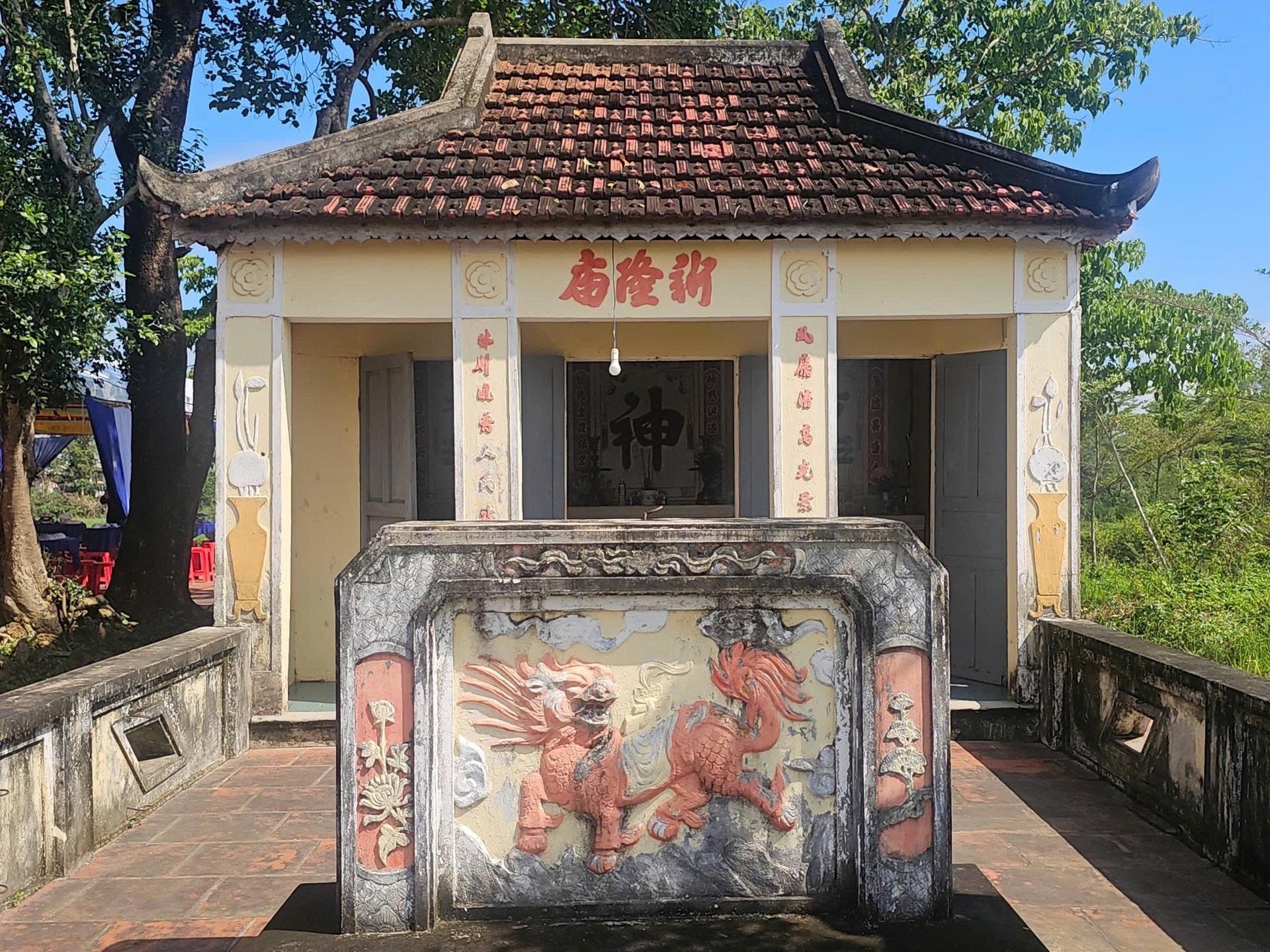
The Old Bau Da Shrine.

The name "Bau Da" is not only a place name, but also a story. People say that in the middle of the village, there is a "water bowl" – a source of pure groundwater, creeping through the bee rock, carrying a very unique natural mineral taste. It is this water that nourishes the special taste of the wine. There is another anecdote about a woman named Du who brought her profession from another place, and people read the camp as "Bau Da" to remember her merits. Whatever the story, the common denominator is appreciation – because people believe that good wine starts with the purity of the land and water.

In that space, each well is like a "living heritage". The villagers not only take water to make wine but also preserve and protect it as part of the spirituality of the profession. The well water must be clear, cool, free of impurities, and it is best to take it in the early morning, when the water flow is most stable.

The art of brewing and distillation - where time becomes the raw material

What makes Bau Da special attraction is not in the scale, but in the way they make wine as a ritual, where each stage bears the imprint of time and experience.

The main ingredient is glutinous rice – a type of rice that must be flexible, fragrant, and highly starchy. Some families even combine mung beans, creating their own flavor variations. But the most important thing is yeast – the "secret to life" of each house.

Leaf yeast in Bau Da is not something that is simply processed. It is made from many herbs such as roots, bark, forest leaves... Each family has its own recipe, which is passed down through generations. The yeast is pounded, dried, and then mixed in certain proportions. It is the yeast that determines the aroma and "smoothness" of the wine.
About the land of Bau Da: Following the traces of drunkenness, discovering the hundred-year-old wine village and the soul of the land of martial arts
Bau Da Wine Village, located in An Nhon Tay Commune, Gia Lai Province, has preserved its traditional rice wine-making craft for more than 200 years and has become an attractive destination for craft village tourism.

The brewing process begins with cooking glutinous rice. The rice must be cooked evenly, not mushy, not dry, loose, and retain its plasticity. After cooking, the rice is spread out to cool naturally, and then mixed with the yeast.

This is a stage that requires the feeling of the worker: mixing too much, the rice will break; mix too lightly, the yeast does not absorb evenly. The mixture is then sealed in a jar or jar – usually ceramic or terracotta, which helps to keep the heat stable.

The dry brewing period lasts about 3 days and 3 nights. During this time, the yeast begins to "eat" the starch, creating a characteristic light aroma. Professionals can only smell it to know whether the batch of wine is "ripe" or not.

After dry brewing, Bau Da well water is added, and continues to brew for another 2 days and 2 nights. This is the complete fermentation stage, which determines the strength of the wine. If the weather changes, the incubation time is also flexibly adjusted – this experience cannot be taught by any book, it can only be accumulated over the years.

Distillation is the "heart" of the whole process. Copper pots or clay pots are placed on a wood stove. The fire must not be too big, nor too weak, but must be "roaring" - the type of fire that burns evenly and steadily for many hours.

The worker sat watching the fire, his eyes did not leave the pot. They listened to the sounds: the sound of boiling water, the sound of wine vapor rising. When the alcohol vapor is cold, it condenses into drops, dripping down slowly. The first drops are usually removed, the best part of the wine is the middle - clear, fragrant.

A batch of wine must be distilled for about 5–6 hours, continuously and carefully. Just by being negligent, the wine can lose its flavor. This is a job that requires almost absolute patience.

The finished product is a high-alcohol wine, usually between 40–45 degrees, but not harsh. When drinking, the feeling is smooth, fragrant, and the aftertaste is a little sweet – a rare balance between strong and soft.
About the land of Bau Da: Following the traces of drunkenness, discovering the hundred-year-old wine village and the soul of the land of martial arts
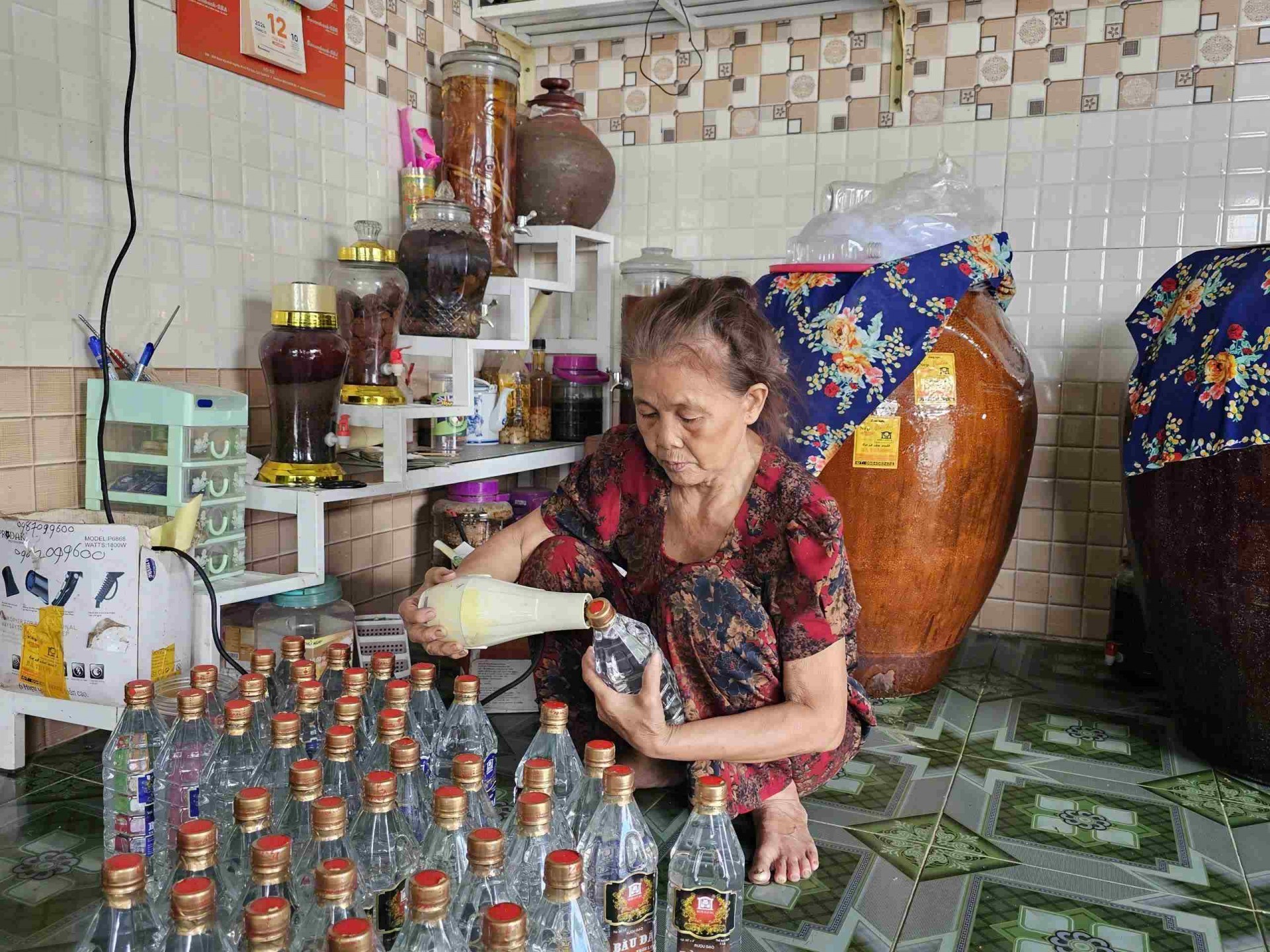
Traditional herbal yeast, glutinous rice, and the village's distinctive well water are the key ingredients that give Bau Da rice wine its unique flavor.

Wine and life - an inseparable cultural feature

For the people of Bau Da, alcohol is not only for drinking but also a part of life. On every holiday, wedding, wedding, cup of wine is a greeting, a way of expressing hospitality.

The people of Nau usually don't talk much, but just pouring a cup of wine and inviting each other, is enough to understand the feelings. Wine becomes a bridge, helping people get closer to each other, sharing life stories and village stories.
About the land of Bau Da: Following the traces of drunkenness, discovering the hundred-year-old wine village and the soul of the land of martial arts
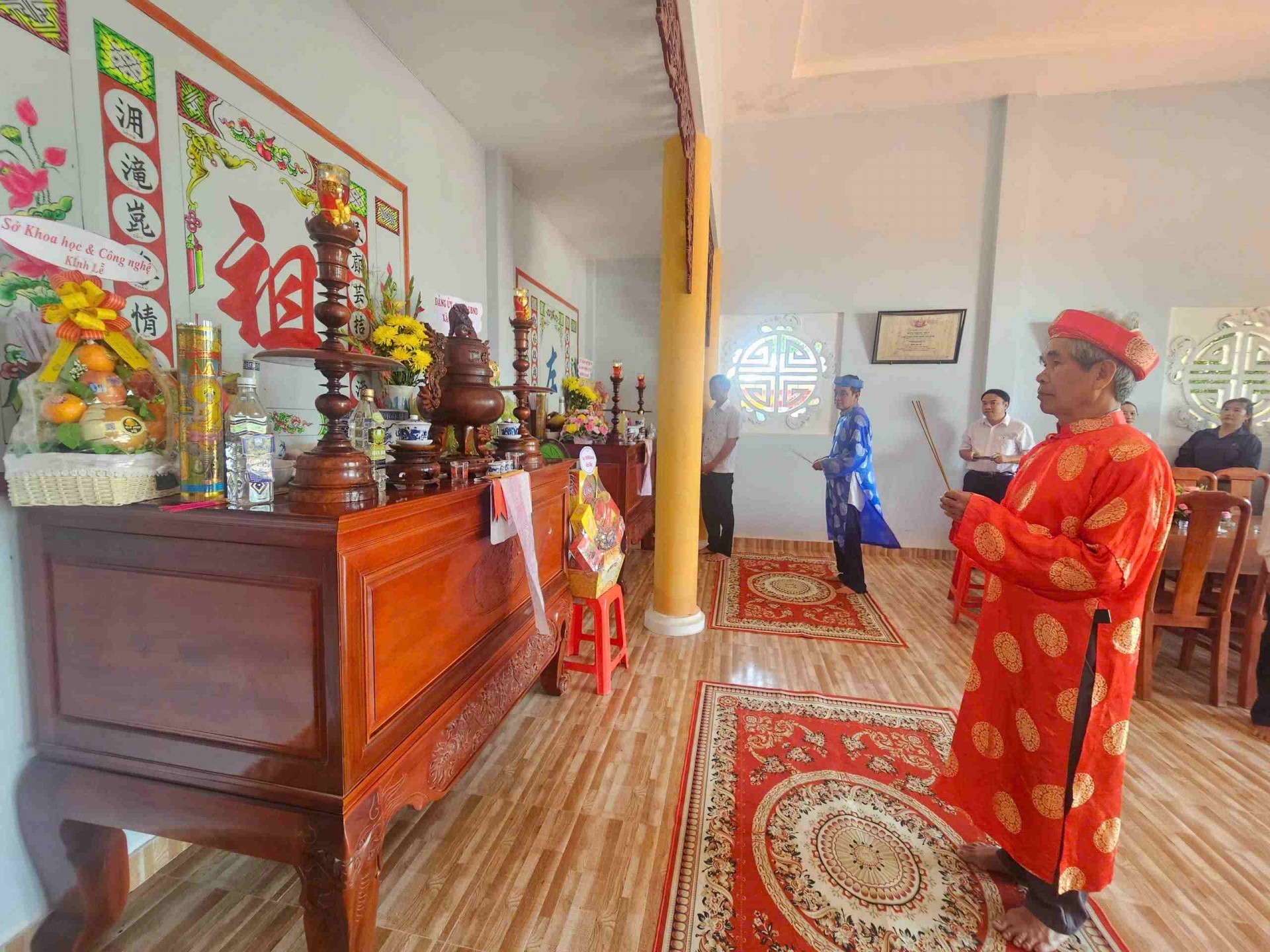
Village elders offer incense in remembrance of the craft's founding ancestor, Huong Nghe.

The familiar image in Bau Da is the drying yards full of jars, bundles of firewood neatly stacked on the veranda, the laughter of the workers mixed with thin smoke. It's not just labor, it's the pace of life – slow but persistent.

Winemaking also creates livelihoods for many families. Each house is a "small workshop", each person is an "artisan". Regardless of young and old, anyone can participate: cooks, brewers, dryers, and firefighters.

Bau Da - the meeting place of experiential tourism and memories

Today, Bau Da is gradually becoming a unique cultural tourism destination. Tourists not only come to buy wine, but also to "live" in the space of the craft village.

They can mix yeast with their own hands, participate in brewing wine, stand by the wood stove to feel the heat of the fire and the meticulousness of the craftsmen. In particular, the stories about the ancestors and the history of the village are told as cultural underground veins, making the trip more profound.

The annual Ancestral Death Ceremony at the beginning of spring is a memorable event. The solemn atmosphere, incense smoke, traditional rituals... all create an experience imbued with spirituality and community.

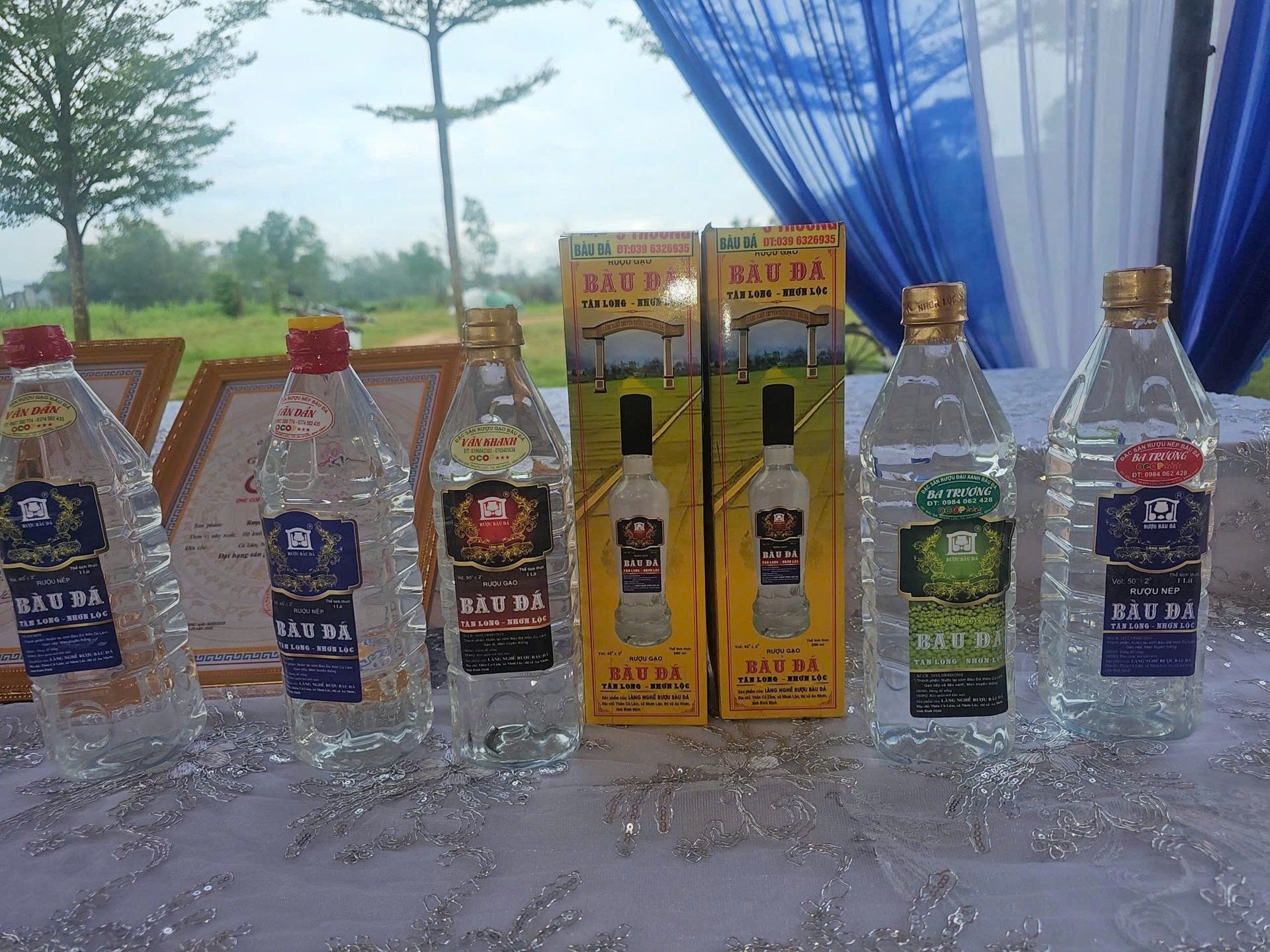
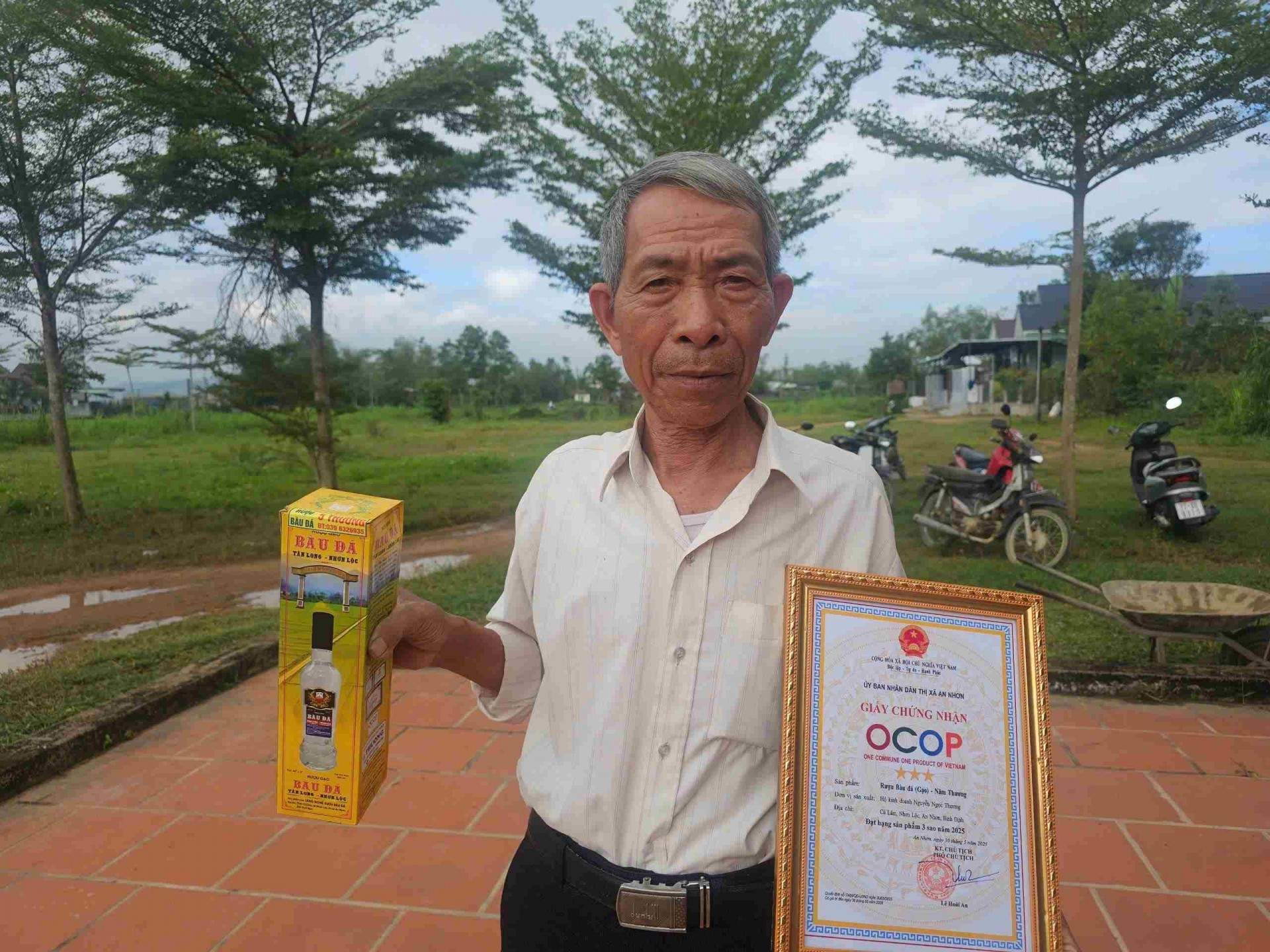
At the same time, Bau Da wine products have been standardized, many lines have achieved OCOP 3-4 stars, contributing to bringing the name of the craft village further. Packaging and labels have been improved, but the production process remains the same – that's the balance between tradition and modernity.
About the land of Bau Da: Following the traces of drunkenness, discovering the hundred-year-old wine village and the soul of the land of martial arts
Mr. Nguyen Ngoc Thuong showcases Nam Thuong Bau Da Rice Wine, a product recognized with a 3-star OCOP certification.

Keeping the traditional fire in the middle of the modern flow

In the context of many places switching to industrial production, Bau Da still chooses its own path: keeping the profession by slowing down. There are no big lines, no mass production, only small pots of wine and devotion.

That's what makes it valuable. It's not just the brand, it's the trust of consumers. Each bottle of wine is not only a product, but a story, a time, and the effort of a whole community.

From the drops of clear wine, the Bau Da people have been building a sustainable economic way, associated with culture and identity. And for visitors, the journey here is not just a trip, but an opportunity to understand that there are values that cannot be measured by speed, but by preservation and love.

In that warm aroma of wine, Bau Da still quietly tells his story - a story about the land, about people, and about things that seem simple but are extraordinarily sustainable.

Tiep Nguyen

Tin liên quan

Tin mới hơn

About the land of Bau Da: Following the traces of drunkenness, discovering the hundred-year-old wine village and the soul of the land of martial arts
OVN - In the midst of the peaceful An Nhon Tay region, where the red soil is sunny and windy embracing the memories of many generations, Bau Da wine village appears as a unique cultural slice. There, every drop of wine is not only a drink, but a crystallization of earth, water, fire and lifelong secrets, encapsulating the soul of the countryside in a spicy taste that is rare anywhere else.

Tin khác

Tra Bong cinnamon flavor - gently spreading, elevating the 4-star OCOP product
OVN - From the mountainous region of Tra Bong (Quang Ngai), where the scent of cinnamon creeps into every way of life, the rustic cinnamon incense sticks are quietly reaching out, carrying the story of identity, preservation and aspiration for sustainable development of the highland people.
'Garden of Eden' in the middle of Moc Chau Plateau
OVN - Among the familiar destinations of Moc Chau (Son La) tourism such as Bach Long glass bridge, Dai Yem waterfall or Vat Hong pagoda relic, some tourists choose to stop at experiential farm models. Here, instead of visiting large-scale works, visitors have more options to walk in the farming space, learn how to grow crops and enjoy agricultural products in the garden.
Creating livelihoods for indigenous women from... Loofah
OVN - In the Cao Son mountains, when the melon season passes, on the wooden fences and the eaves of stilt houses, there are often a few dried old melons left. For many years, people have only kept it for breeding, or stripped the fibers to wash dishes. No one thought that this rough material would one day become an art painting, a handbag or a souvenir for tourists.
Vuong Family Mansion: Legend in the Stone Plateau
OVN - The summer sun spilled over into the Sa Phin valley in the old Ha Giang province (now Tuyen Quang province), covering the yin and yang tile roofs that had faded over time.
Ca Mau: Traditional professions that hold the soul of the earth at the end of heaven
OVN - At the bottom of the map of Vietnam, where the land touches the sea and the melaleuca forest embraces the salty, sweet rivers, Ca Mau is not only known for its special ecosystem, but also for the traditional craft villages that have formed, existed and developed with the history of exploitation of this land.
From rustic food to high-value goods
OVN - From rustic dishes attached to people's daily meals, many specialties of Thanh Hoa such as shrimp paste, Ai village sauce, bamboo shoots, thorn cakes or lam tea... are gradually stepping out of the village space to become high-value commodity products.
Arabica Son La: Building a coffee brand from the green value chain
OVN - From the largest raw material area in the country, Son La Arabica is entering a new stage of development. In the global trend of sustainable consumption, product provenance and environmental responsibility, coffee brands are no longer determined by taste alone, but also by the story behind each coffee bean. Therefore, Son La is choosing the path of building a brand from the green value chain.
Cu do Ha Tinh - When molasses, lac rang tells the story of the village
OVN - In the midst of the sunny and windy Central region, where the land is harsh but the people are rich in energy and sophistication, Cu Do candy was born as a testament to the way Ha Tinh people distill each simple ingredient to create an unmistakable taste. From a rustic hometown gift, today's cu do is stepping out of the village space, becoming an OCOP product with bold cultural imprints and clear economic potential.
Thai people in Dien Bien keep the culinary soul with OCOP products
OVN - From the simple ingredients of the mountains and forests of the Northwest, the Thai people in Dien Bien have created dishes with their own flavors that cannot be mixed. Over time, specialties that were only present in family meals have now been standardized, branded and put on the OCOP "passport". It is not only a story of raising the level of local products, but also a journey to bring national cultural identity to a wider market.
10,000 hands connected: A Vietnamese record from the heart of the Northwest
In the middle of the first days of the new year, by the deep blue Da Giang river, Muong Lay burst into a bustling summer festival atmosphere. The hands clenched together, the endlessly extended circles like the flow of culture never rested. It is not only a record, but a declaration of the solidarity of 19 ethnic groups on the land of Dien Bien.
Sung village: Weaving brocade, weaving livelihoods for Dao Tien women
OVN - In Sung hamlet, Cao Son commune, Dao Tien brocade sheets are not only a cultural identity but also a stable source of livelihood for 12 women, including people with disabilities and difficult circumstances. From a traditional profession that once faced the risk of death, the Dao Tien brocade cooperative group (THT) has been "revived" thanks to its association with community tourism, bringing in hundreds of millions of VND in revenue per year.
Hoa dã quỳ Điện Biên: Tiềm năng OCOP từ mỏ vàng chưa được khai phá
OVN - Những triền đồi Điện Biên khoác lên mình sắc vàng rực rỡ của hoa dã quỳ. Vẻ đẹp thiên nhiên ấy không chỉ dừng lại ở ngắm nhìn, mà đang mở ra cơ hội lớn để Điện Biên phát triển chuỗi sản phẩm OCOP từ du lịch cộng đồng, sản phẩm chế biến đến dịch vụ trải nghiệm.
Công nghệ cao: Cuộc đại chuyển mình của nông nghiệp Sơn La
OVN - Không còn là những mùa vụ phụ thuộc hoàn toàn vào nắng mưa, nông nghiệp Sơn La đang vận hành bằng nhà màng, dây chuyền chế biến và các quy trình kỹ thuật chuẩn hóa. Hành trình chuyển mình từ canh tác truyền thống sang sản xuất ứng dụng công nghệ cao gắn với công nghiệp chế biến đã tạo nên một diện mạo hoàn toàn mới cho kinh tế nông nghiệp nơi đây. Sự chuyển mình ấy không đến trong một sớm một chiều. Nó bắt đầu từ những chủ trương lớn, từ các nghị quyết được cụ thể hóa bằng quy hoạch, cơ chế và nguồn lực. Khi chính sách mở đường, công nghệ đã có lối để đi vào ruộng đồng.
Phú Thọ: Khi hợp tác xã “lên đời” nhờ số hoá
Trong dòng chảy của kinh tế số, chuyển đổi số không còn là câu chuyện dành riêng cho doanh nghiệp lớn. Ở khu vực nông thôn, nhiều hợp tác xã nông nghiệp tại Phú Thọ đang cho thấy khi tư duy thay đổi, công nghệ có thể trở thành đòn bẩy giúp mô hình sản xuất truyền thống bứt phá mạnh mẽ.
OCOP Lào Cai chuyển mình với tư duy xanh và thương mại số
Không còn dừng ở câu chuyện “mỗi xã một sản phẩm”, Lào Cai đang đặt tham vọng lớn hơn cho chương trình OCOP: biến nông sản bản địa thành hàng hóa có sức cạnh tranh bằng tư duy xanh, công nghệ số và chuỗi giá trị bền vững. Từ những vùng chè trên núi cao, những cơ sở chế biến dược liệu, mật ong, miến đao hay thổ cẩm của đồng bào dân tộc… tất cả đang được đưa lên sàn thương mại điện tử, truy xuất nguồn gốc bằng mã số, mã vạch và bước vào cuộc chơi mới của thị trường hiện đại.
Tin mới Đọc nhiều
Giao diện di động