Creating livelihoods for indigenous women from... Loofah

OVN - In the Cao Son mountains, when the melon season passes, on the wooden fences and the eaves of stilt houses, there are often a few dried old melons left. For many years, people have only kept it for breeding, or stripped the fibers to wash dishes. No one thought that this rough material would one day become an art painting, a handbag or a souvenir for tourists.

Dried melons and the feelings of highland women

The person who "awakened" that value was Ms. Xa Thi Nga, a Muong ethnic girl in Xeo hamlet, Cao Son commune (Phu Tho). Born in the middle of mountains and hills covered with clouds all year round, Ms. Nga grew up in the months of witnessing women in the village from morning to night, but life was still lacking before and after. Many women have to leave their hometowns to go to industrial parks in Bac Ninh, Bac Giang, Ninh Binh... working for hire, sending their children at home to be taken care of by their grandparents. Those quiet breakups made her desperate. In the midst of many difficulties in the village, she always has a painful thought: how can women in the highlands make a living right in their own homeland?

The opportunity came during a training class and a visit to the local economic model. Returning home, looking at the old melons dangling in the garden, she suddenly thought: "Why not try to do something different from this familiar thing?"

That idea gradually took shape. In 2024, the model "Establishing the value chain of indigenous loofah" was officially born. But, to turn an idea into a real product is not a simple journey. Ms. Nga had to learn everything by herself, from choosing melon varieties, processing fibers, creating molds, dyeing to how to sew and stitch manually. Loofah is not as soft as fabric, much less easy to shape like bamboo. Just a little hard hand will tear or lose its shape.

Creating livelihoods for indigenous women from... Loofah
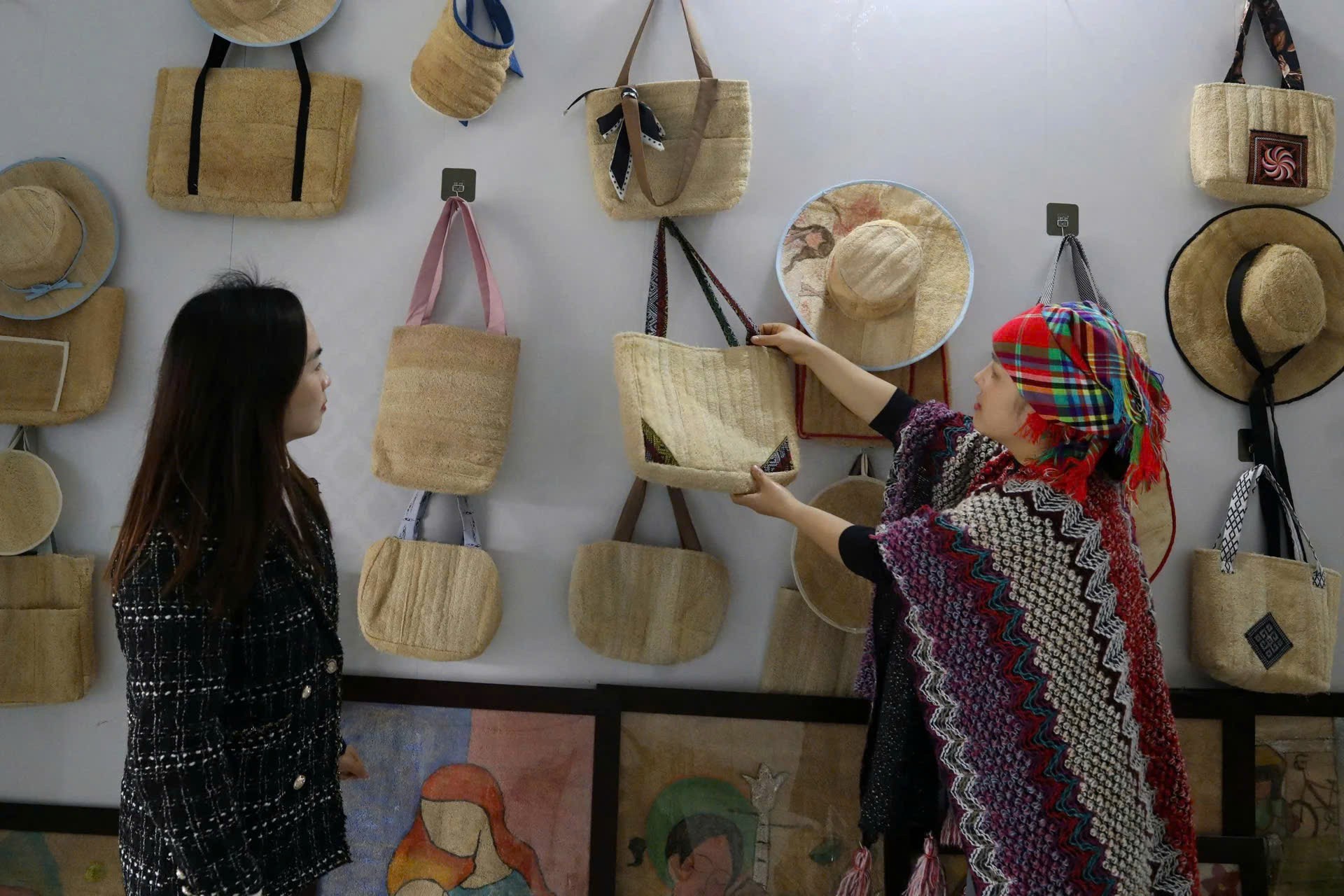
Ms. Xa Thi Nga introduces handmade loofah fiber products to visitors.

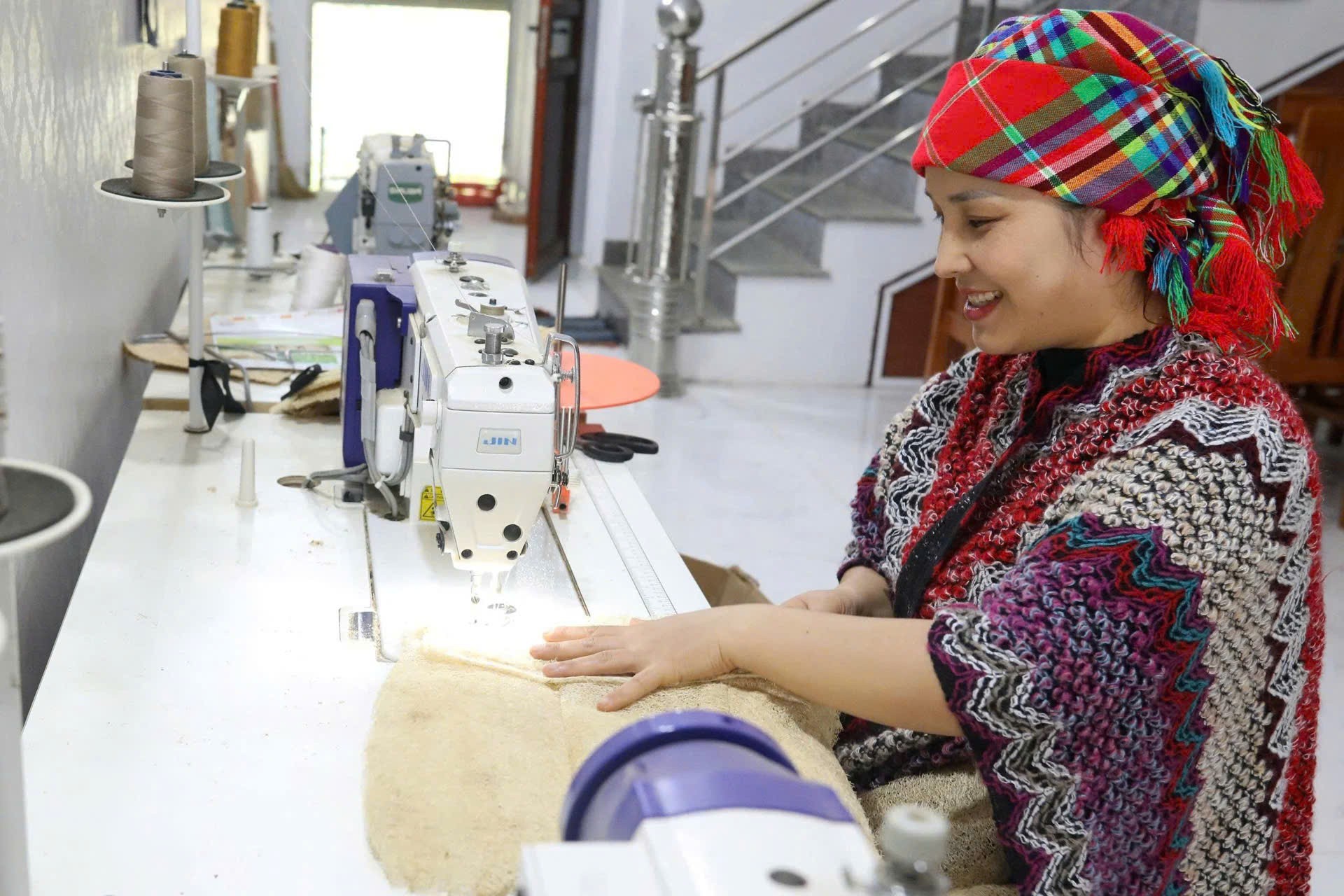
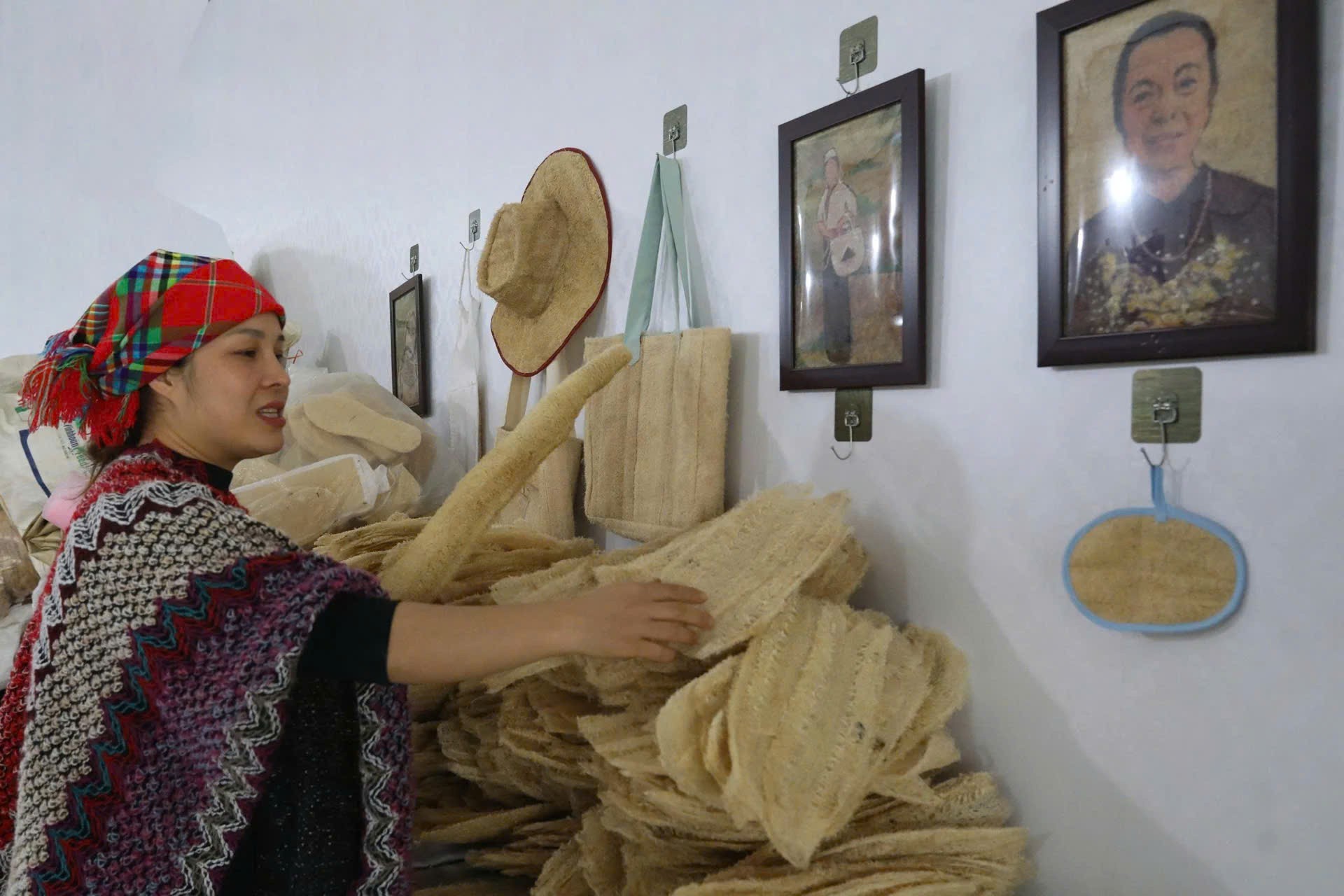
Ms. Nga said: "Loofah is very easy to tear or deform if you are not careful. Each stage must be done slowly and meticulously to both ensure durability and maintain aesthetics. To complete a product, the maker must choose the melons with the right age, dry them thoroughly, clean them and then press them flat. After that, it comes to the stage of cutting, shaping, dyeing and hand stitching completely."

The patience of the Muong woman also brought unexpected results. The rustic layers of loofah begin to turn into wall paintings, bags, hats, decorations or eco-friendly household items. Each product has its own character because it is handmade by the hands of highland women.
Creating livelihoods for indigenous women from... Loofah
Ms. Nga carries out meticulous handmade processes to create products from loofah fiber.

In particular, the loofah paintings created by Ms. Nga's own daughter are becoming a favorite gift for many tourists when visiting this mountainous area. In the midst of the small workshop smelling of dry sunshine and loofah, things that were once considered discarded now take on a different, softer, more valuable shape.

When loofah is not only a product, but also a way to keep people in the village

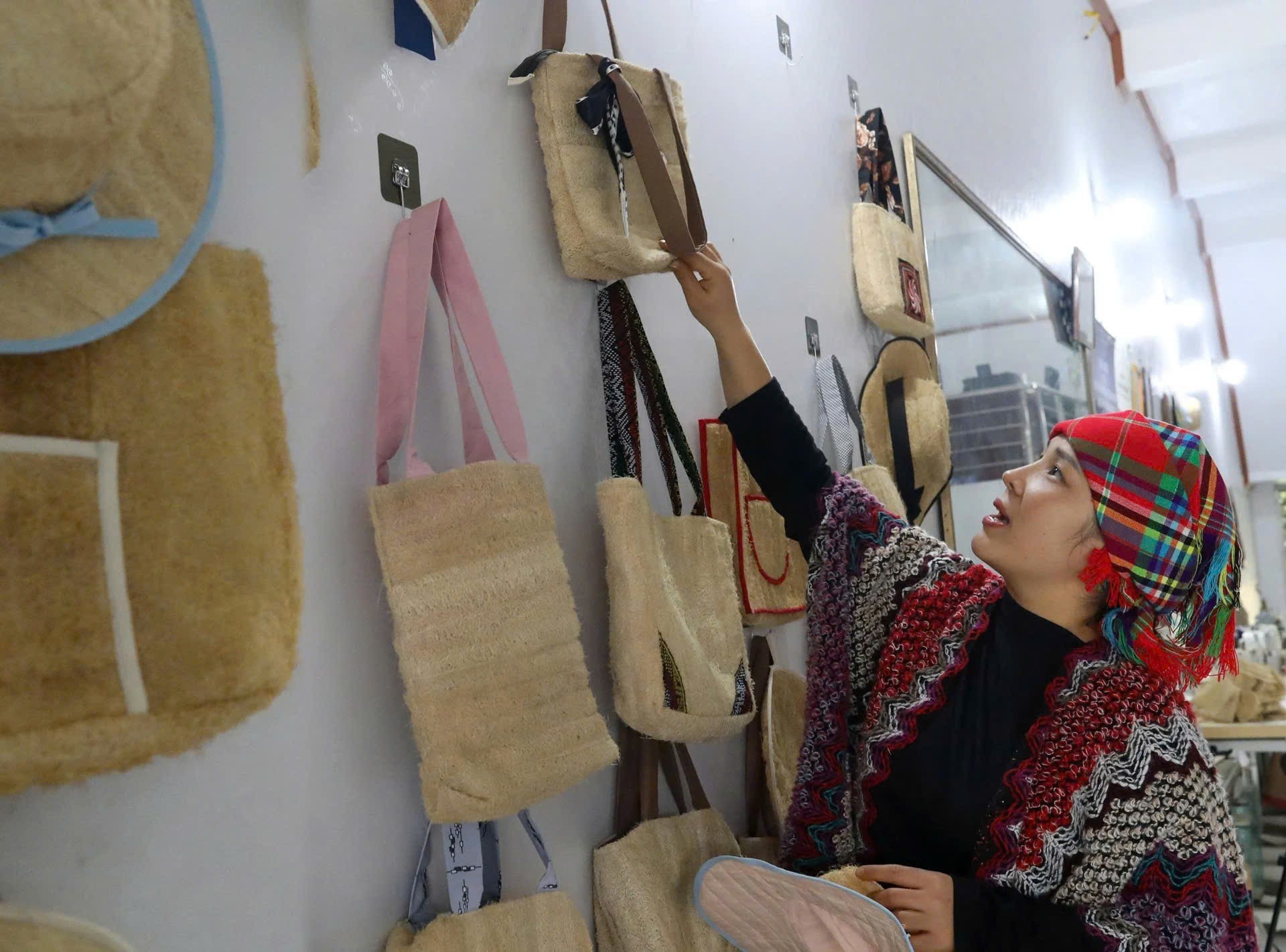
What makes Ms. Xa Thi Nga's model so special is not only the creativity, but also the way it is quietly creating livelihoods for many women in Cao Son. From a few initial handicrafts, up to now, ChaPi loofah factory has developed into many different product lines. There is an art group with decorative paintings made from loofah; the body care group includes bath cottons, back scrubs, and facial cleansing cottons; household appliances such as pot and pan brushes, steaming cakes, cup liners; and also fashion accessories such as bags, hats, decorations. Each item has its own rustic beauty, a beauty that makes people clearly feel the breath of the mountains and forests and the ingenuity of the hands of highland women.
Creating livelihoods for indigenous women from... Loofah
Loofah fiber products are crafted through the creativity and skilled hands of highland women.

To find an output for the product, Ms. Nga not only sells to tourists but also actively promotes on social networks, bringing products to participate in fairs and exhibitions inside and outside the province. As a result, more and more people know about ChaPi loofah products.

Currently, the model brings her an income of tens of millions of VND per month. But what she cherishes most is the creation of stable jobs for women in the village. The loofah factory currently has 5 female employees working regularly with an income of 4-6 million VND/month. In addition, there are dozens of seasonal workers who are paid about 300,000 VND/day.

Not only creating jobs, Ms. Nga also consumes loofah for 8 households at a price of 5,000 - 6,000 VND/fruit. The melons that used to dry on the trellis have now become a new source of income for many highland households.

Chairwoman of the Cao Son Commune Farmers' Association, Ms. Ha Thi Khanh assessed: "This is a meaningful model, not only helping to increase income for ethnic minority women but also contributing to promoting indigenous culture to tourists".
Creating livelihoods for indigenous women from... Loofah
Indigenous loofah fiber products are displayed in a variety of designs, combining practical uses with the beauty of traditional handicrafts.

In a place where many young people have left their hometowns to find jobs downstream, Ms. Xa Thi Nga's story is like an affirmation: the homeland can still feed people, if they know how to see the value from the most simple things.

In the long-term orientation, the ChaPi loofah model is not only a simple handmade product but is also expected to develop in the direction of OCOP, associated with experiential tourism and promoting highland culture. If properly invested in designs, brands and markets, products from highland women's loofah can completely become typical products with Cao Son's own imprint.

Hang Thu

Tin liên quan

Tin mới hơn

Creating livelihoods for indigenous women from... Loofah
OVN - In the Cao Son mountains, when the melon season passes, on the wooden fences and the eaves of stilt houses, there are often a few dried old melons left. For many years, people have only kept it for breeding, or stripped the fibers to wash dishes. No one thought that this rough material would one day become an art painting, a handbag or a souvenir for tourists.

Tin khác

Vuong Family Mansion: Legend in the Stone Plateau
OVN - The summer sun spilled over into the Sa Phin valley in the old Ha Giang province (now Tuyen Quang province), covering the yin and yang tile roofs that had faded over time.
Ca Mau: Traditional professions that hold the soul of the earth at the end of heaven
OVN - At the bottom of the map of Vietnam, where the land touches the sea and the melaleuca forest embraces the salty, sweet rivers, Ca Mau is not only known for its special ecosystem, but also for the traditional craft villages that have formed, existed and developed with the history of exploitation of this land.
From rustic food to high-value goods
OVN - From rustic dishes attached to people's daily meals, many specialties of Thanh Hoa such as shrimp paste, Ai village sauce, bamboo shoots, thorn cakes or lam tea... are gradually stepping out of the village space to become high-value commodity products.
Arabica Son La: Building a coffee brand from the green value chain
OVN - From the largest raw material area in the country, Son La Arabica is entering a new stage of development. In the global trend of sustainable consumption, product provenance and environmental responsibility, coffee brands are no longer determined by taste alone, but also by the story behind each coffee bean. Therefore, Son La is choosing the path of building a brand from the green value chain.
Cu do Ha Tinh - When molasses, lac rang tells the story of the village
OVN - In the midst of the sunny and windy Central region, where the land is harsh but the people are rich in energy and sophistication, Cu Do candy was born as a testament to the way Ha Tinh people distill each simple ingredient to create an unmistakable taste. From a rustic hometown gift, today's cu do is stepping out of the village space, becoming an OCOP product with bold cultural imprints and clear economic potential.
Thai people in Dien Bien keep the culinary soul with OCOP products
OVN - From the simple ingredients of the mountains and forests of the Northwest, the Thai people in Dien Bien have created dishes with their own flavors that cannot be mixed. Over time, specialties that were only present in family meals have now been standardized, branded and put on the OCOP "passport". It is not only a story of raising the level of local products, but also a journey to bring national cultural identity to a wider market.
10,000 hands connected: A Vietnamese record from the heart of the Northwest
In the middle of the first days of the new year, by the deep blue Da Giang river, Muong Lay burst into a bustling summer festival atmosphere. The hands clenched together, the endlessly extended circles like the flow of culture never rested. It is not only a record, but a declaration of the solidarity of 19 ethnic groups on the land of Dien Bien.
Hoa dã quỳ Điện Biên: Tiềm năng OCOP từ mỏ vàng chưa được khai phá
OVN - Những triền đồi Điện Biên khoác lên mình sắc vàng rực rỡ của hoa dã quỳ. Vẻ đẹp thiên nhiên ấy không chỉ dừng lại ở ngắm nhìn, mà đang mở ra cơ hội lớn để Điện Biên phát triển chuỗi sản phẩm OCOP từ du lịch cộng đồng, sản phẩm chế biến đến dịch vụ trải nghiệm.
Công nghệ cao: Cuộc đại chuyển mình của nông nghiệp Sơn La
OVN - Không còn là những mùa vụ phụ thuộc hoàn toàn vào nắng mưa, nông nghiệp Sơn La đang vận hành bằng nhà màng, dây chuyền chế biến và các quy trình kỹ thuật chuẩn hóa. Hành trình chuyển mình từ canh tác truyền thống sang sản xuất ứng dụng công nghệ cao gắn với công nghiệp chế biến đã tạo nên một diện mạo hoàn toàn mới cho kinh tế nông nghiệp nơi đây. Sự chuyển mình ấy không đến trong một sớm một chiều. Nó bắt đầu từ những chủ trương lớn, từ các nghị quyết được cụ thể hóa bằng quy hoạch, cơ chế và nguồn lực. Khi chính sách mở đường, công nghệ đã có lối để đi vào ruộng đồng.
Phú Thọ: Khi hợp tác xã “lên đời” nhờ số hoá
Trong dòng chảy của kinh tế số, chuyển đổi số không còn là câu chuyện dành riêng cho doanh nghiệp lớn. Ở khu vực nông thôn, nhiều hợp tác xã nông nghiệp tại Phú Thọ đang cho thấy khi tư duy thay đổi, công nghệ có thể trở thành đòn bẩy giúp mô hình sản xuất truyền thống bứt phá mạnh mẽ.
OCOP Lào Cai chuyển mình với tư duy xanh và thương mại số
Không còn dừng ở câu chuyện “mỗi xã một sản phẩm”, Lào Cai đang đặt tham vọng lớn hơn cho chương trình OCOP: biến nông sản bản địa thành hàng hóa có sức cạnh tranh bằng tư duy xanh, công nghệ số và chuỗi giá trị bền vững. Từ những vùng chè trên núi cao, những cơ sở chế biến dược liệu, mật ong, miến đao hay thổ cẩm của đồng bào dân tộc… tất cả đang được đưa lên sàn thương mại điện tử, truy xuất nguồn gốc bằng mã số, mã vạch và bước vào cuộc chơi mới của thị trường hiện đại.
Cánh đồng ‘lên sóng’: Điện Biên đưa nông sản bản địa lên ‘chợ số’
Giữa cái nắng đầu hè phủ lên cánh đồng ở xã Thanh An (Điện Biên), những ruộng khoai vừa vào vụ thu hoạch bỗng trở thành nơi diễn ra một “phiên chợ số” đặc biệt. Xen giữa màu đất đỏ và những sọt nông sản mới nhổ là ánh đèn livestream, tiếng chào bán hàng rộn ràng cùng sự xuất hiện của các TikToker, KOL, KOC nổi tiếng. Lần đầu tiên, những người nông dân vốn quen với ruộng đồng, cuốc xẻng lại cùng các nhà sáng tạo nội dung đứng chung một khung hình để kể câu chuyện về nông sản Điện Biên theo cách hoàn toàn mới.
Chương trình OCOP Quảng Trị thúc đẩy phát triển nông thôn
LVN - Sau 6 năm, thực hiện chương trình mỗi xã một sản phẩm (OCOP) tỉnh Quảng Trị có 372 sản phẩm, nâng cao chất lượng, mở rộng thị trường trong và ngoài nước thúc đẩy xây dựng nông thôn mới.
Đưa cá kho của nông dân Hải Phòng thành sản phẩm OCOP chất lượng
LVN - Ngoài năm mươi tuổi mới bắt đầu tập nuôi, thả tôm, cá... trải qua nhiều khó khăn vấp ngã, Anh Ngô Văn Đón, xã Việt Khê, thành phố Hải Phòng đã dần có những thành công nhờ việc nuôi cá trạch, cá trê, sau đó chế biến thành cá kho, đưa sản phẩm đến tận tay người tiêu dùng.
Bắc Ninh hướng tới 100 sản phẩm OCOP từ 3 sao trở lên
LVN - Tỉnh Bắc Ninh đặt mục tiêu phát triển ít nhất 100 sản phẩm OCOP đạt từ 3 sao trở lên, thúc đẩy kinh tế nông thôn bền vững và phát triển thương hiệu.
Tin mới Đọc nhiều
Giao diện di động