

Vuong Family Mansion: Legend in the Stone Plateau

Following the winding road, the Vuong family mansion appeared in front of our eyes amidst the gray stone of Dong Van Plateau, like an ancient fortress with the breath of a frontier era.
Over the past hundred years, that work has not only preserved the traces of the power of the "Cat King" Vuong Chinh Duc, but also became a special cultural and tourist meeting point in the northernmost mountainous region of the country.
The stone mansion on the back of a "sacred turtle"
Looking down from above, the entire palace is located on a turtle shell-shaped mound in the middle of the Sa Phin valley.
It is not a coincidence because at the end of the nineteenth century, when he became the richest and most powerful person in the rocky highlands thanks to the opium trade, Vuong Chinh Duc began to look for a place to build a business for his family. He invited a Han geographer named Zhang Zhao to dive throughout the four highland districts to find the "sacred land".
After many months of watching the dragon vein, Truong Chieu stopped in Sa Phin and affirmed: "This place has a rare land. The turtle-shaped mound floats in the middle of the valley, surrounding the rocky mountains like a man-made screen. Building a house on the back of a turtle, the clan will be as sustainable as the rocks of Dong Van mountain."
That belief was the beginning of a project that cost up to 15 thousand Indochinese white silver coins, a huge amount at that time.
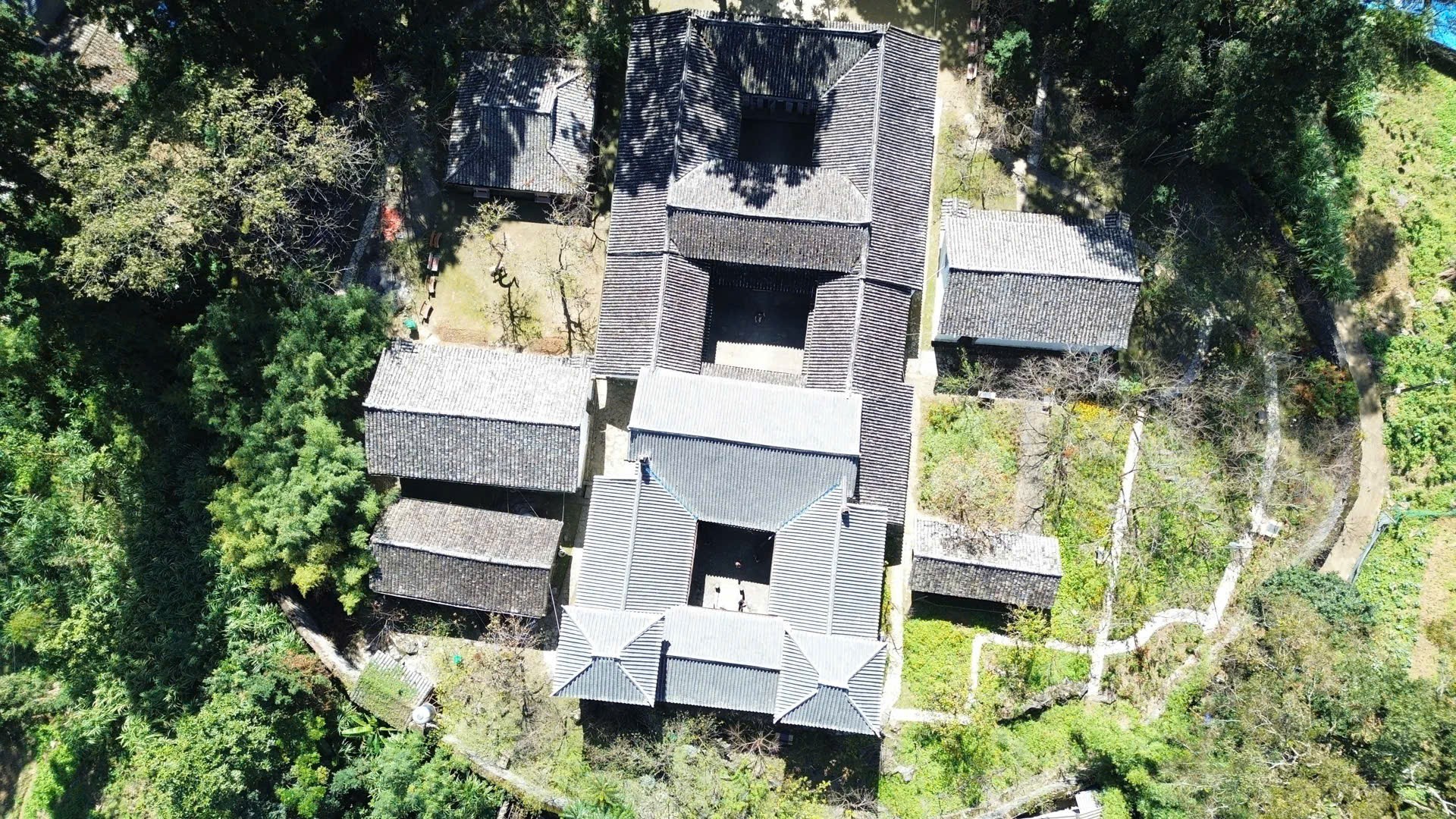 |
| An aerial view of the Vuong Family Mansion nestled in Sa Phin Valley, standing out amid the rocky landscape of the Dong Van Karst Plateau. |
The more you look at the Vuong Family Mansion, the more you see that it is like a living museum of border culture. The construction idea was sketched by the Kinh conspirator of Nam Dinh origin Nguyen Hoang and military leader Cu Ton Lu.
After that, Vuong Chinh Duc hired the general of the Thanh Dynasty Tong Bach Giao as the general contractor, combined with a "Muslim engineer in Yunnan" to design and construct. Therefore, the whole palace is like a strange meeting of three cultures.
There is a technique of presenting walls, stacking stones and roofing yin and yang tiles typical of the Mong people in the rocky area. It also has a Chinese architectural style with four horizontal and six vertical houses divided into the forecourt, the middle courtyard and the rear courtyard.
And low in each door frame is the breath of the West with French fireplaces, triple-glazed windows, iron and glass frames that were once transported from distant France to the rocky mountains.
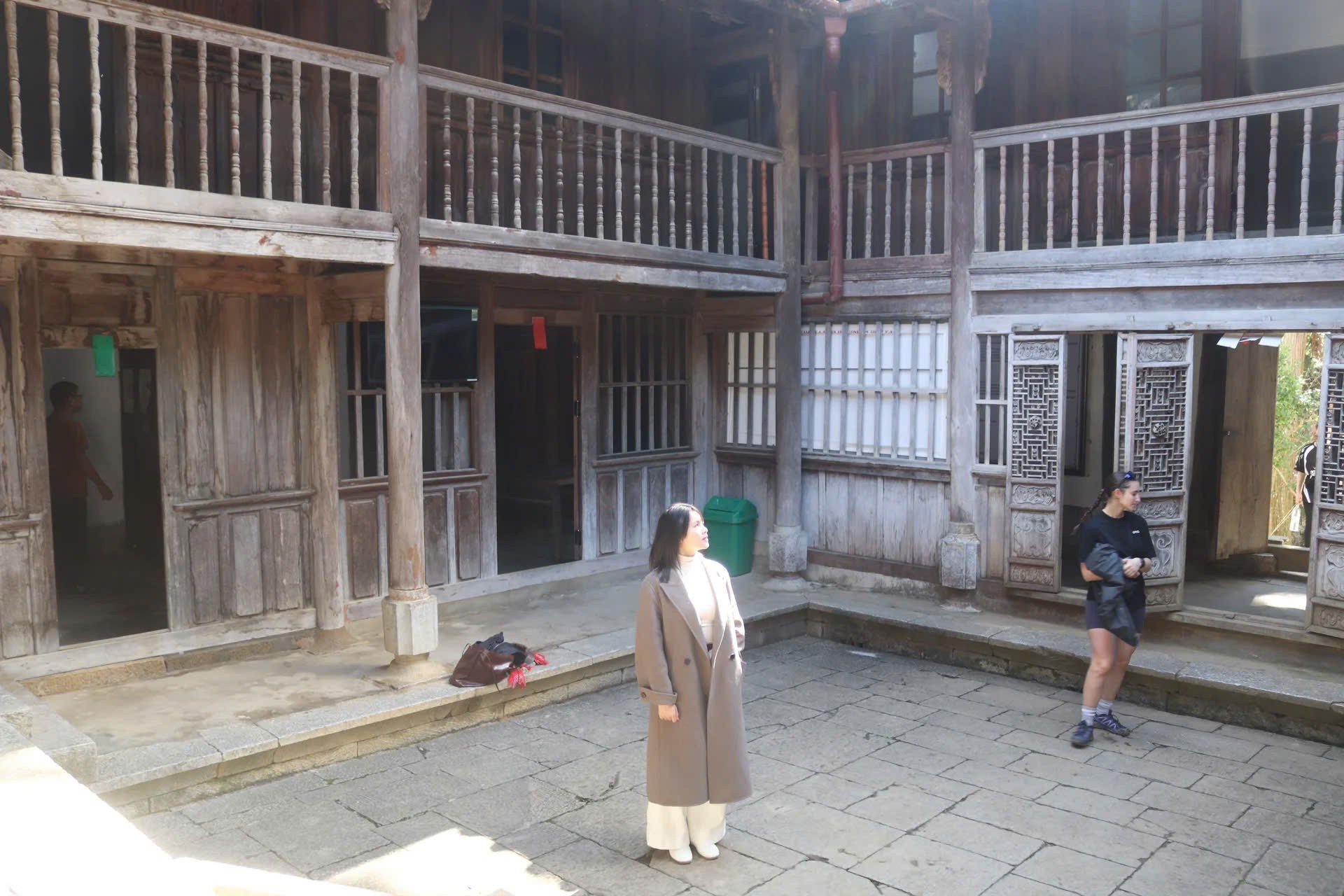 |
| The interior architecture of the Vuong Family Mansion reflects the cultural fusion of H’Mong, Chinese, and French influences over more than a century. |
Nowadays, visitors to Sa Phin often stop for a long time at the stone yard covered with green moss in the middle of the pavement. Some people sit quietly and listen to the wind passing through the rows of deserts. Some people reached out and touched the bitterly cold stone walls that had passed through more than a hundred seasons of rain and sunshine.
In the midst of that space, the most obvious feeling is not the luxury, but the breath of highland culture that is still intact in each tile roof, each wooden column, each carving of peach blossoms and plum blossoms of the ancient H'Mong people.
The "impregnable" fortress and historical echoes
From the outside, the Wang Family Palace is more like a military stronghold than a residence.
The whole palace is surrounded by a green stone wall up to 60-70cm thick, about 2m high. On the wall, there are 36 apricot holes for guards. The four corners are four solid plots facing the valley.
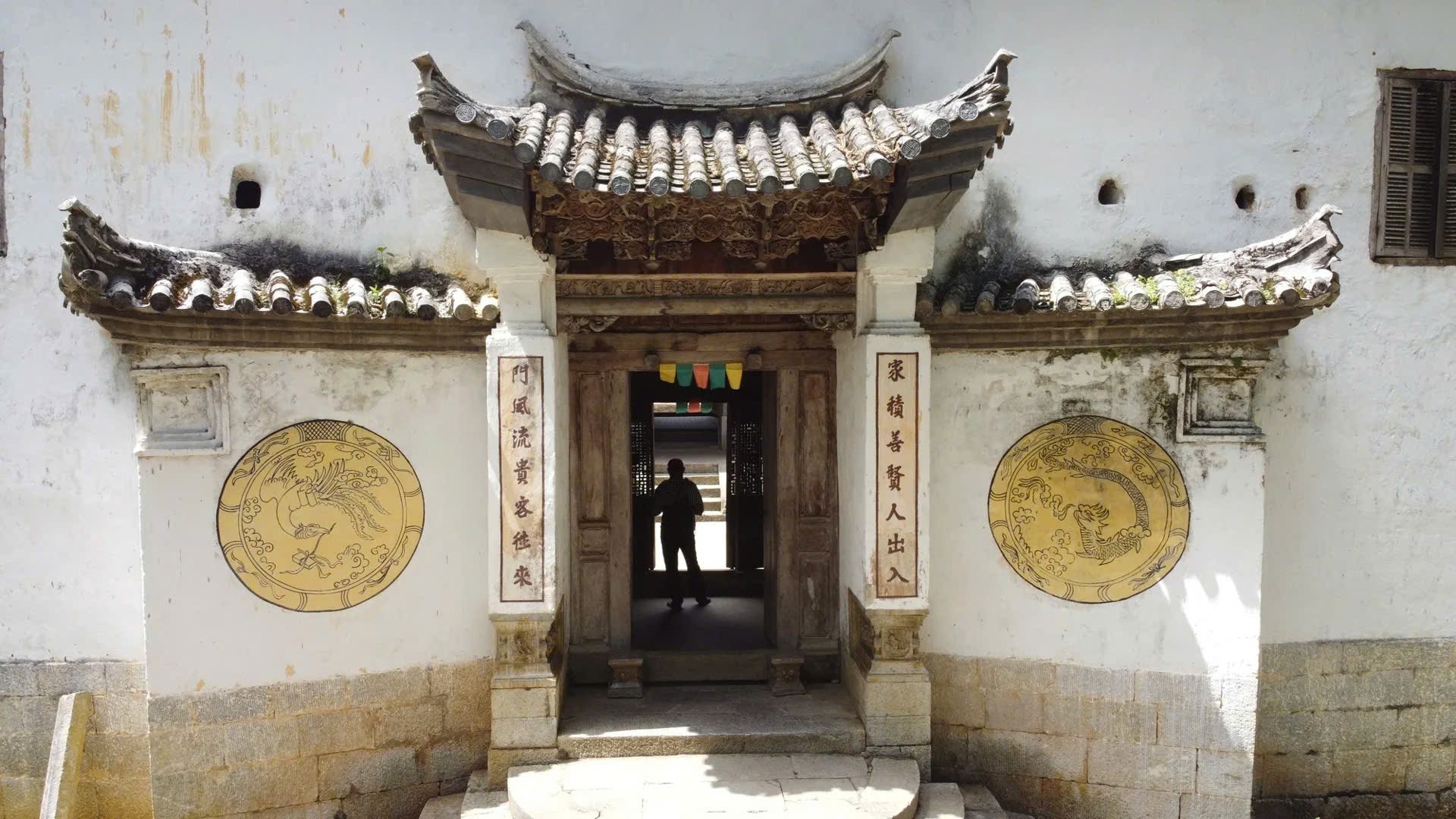 |
| The main gate of the Vuong Family Mansion, once regarded as a “stone fortress” in Vietnam’s northern frontier. |
In the context of turbulent history at the end of the nineteenth century, when military forces were always vying for influence on the frontier, Vuong Chinh Duc was forced to turn his residence into a real fortress.
Inside that stone shell are 64 consecutive rooms with a rare pine rafters and rare stones. The base of the pillar is carved in the shape of a poppy fruit, which once brought wealth to the Vuong family.
The soft carved lines on the wood make the space both majestic and calm.
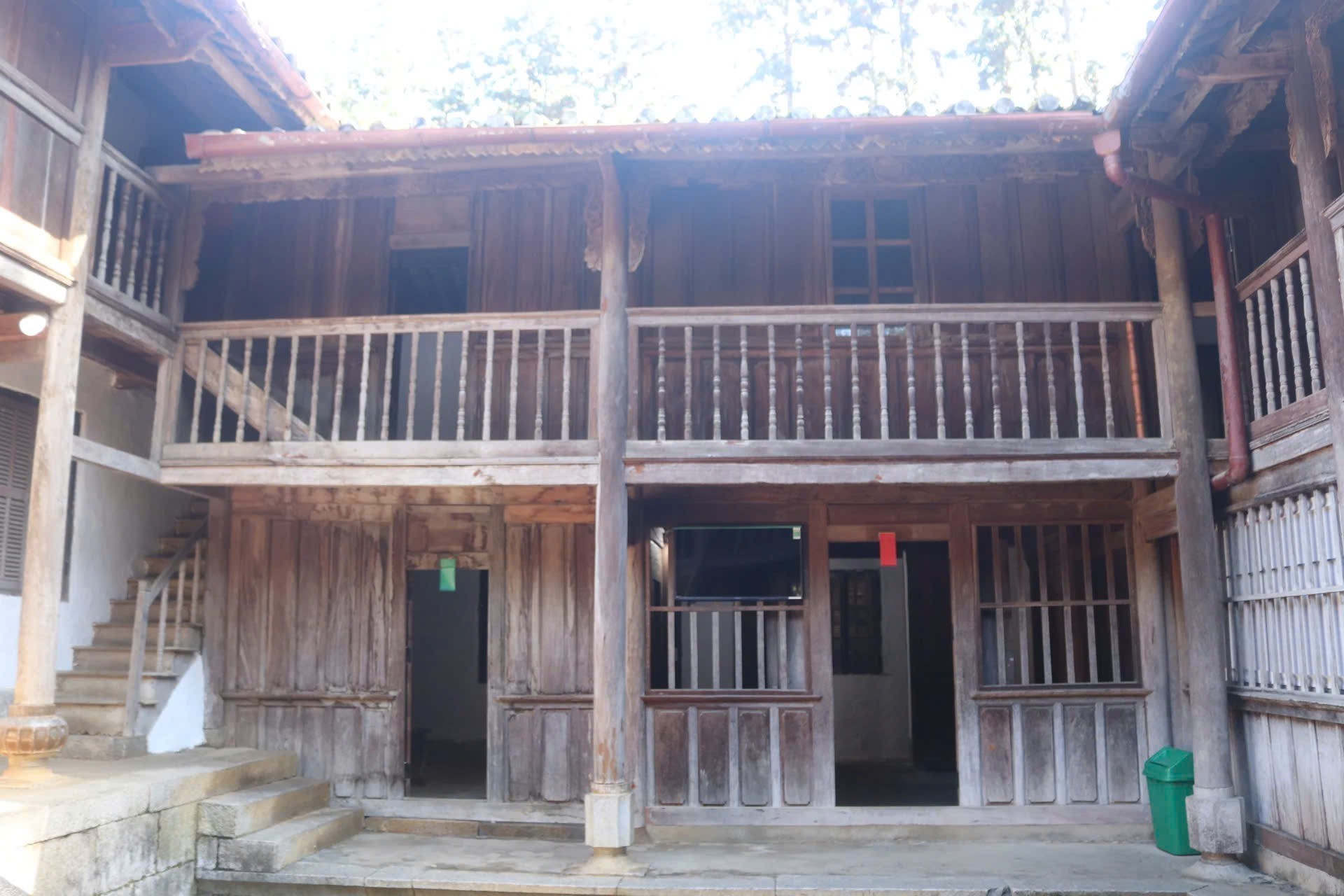 |
| The interconnected system of 64 rooms featuring rare stone pine wooden frameworks inside the Vuong Family Mansion. |
The prudence of the "Cat King" is also present in every small detail. In the middle of the yard, there is a monolithic stone water tank with a capacity of about 200m³, which is a source of life for the whole clan to entrench for many months if it is besieged in the middle of a rocky plateau with scarce water.
The ancients said that Vuong Chinh Duc's bedroom was directly connected to the underground cellar and the block. He always used special chopsticks to test the poison in every meal. Behind the splendor of a family that once held power in the frontier is the constant anxiety of turbulent times.
Later, beyond the stories of power and opium, the Wang family palace also carried the value of a special historical memory. In the middle of the front courtyard, there is still a painting painted with golden lipstick with the Chinese inscription: "Bien Chinh can be phong". This is a treasure given by King Khai Dinh in 1923 to Vuong Chinh Duc, recognizing the merits of governing the border area.
After Vuong Chinh Duc died, his son Vuong Chi Xin (Vuong Chi Thanh) continued his career.
Unlike his father, he followed the Revolution, made many contributions to the resistance war against France, was trusted by Uncle Ho and became a member of the National Assembly of the first and second terms. For his contributions to building the great national unity, he was posthumously awarded the Order of National Unity.
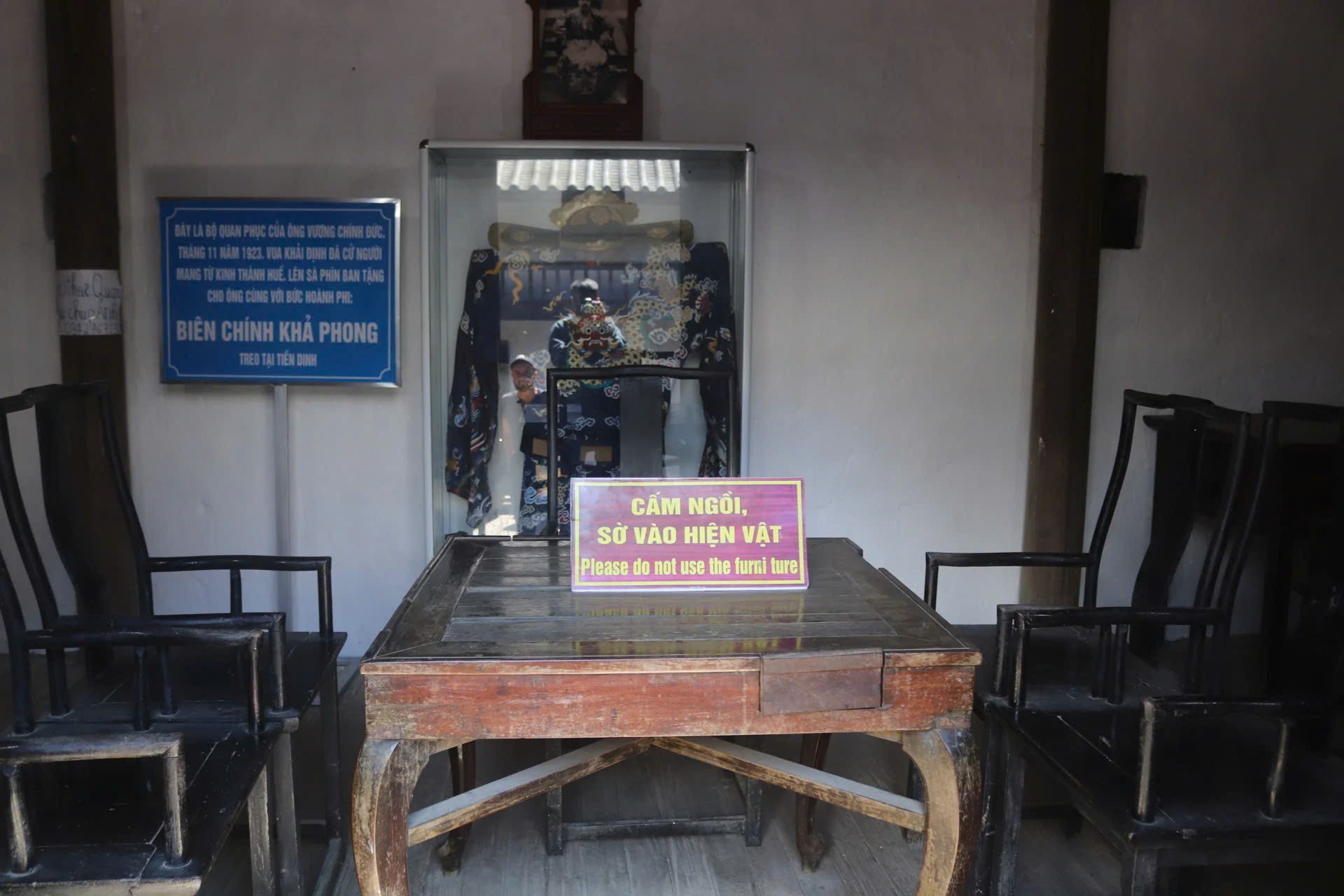 |
| An exhibition corner inside the Vuong Family Mansion preserving artifacts and memories of the life and influence of “Cat King” Vuong Chinh Duc. |
In 2004, the Vuong family decided to donate the entire mansion to the State for conservation. Up to now, this place has become one of the most special stops on the journey to explore Dong Van Rock Plateau Global Geopark.
Coming to Sa Phin valley, tourists still slowly walk over the old stone steps, look up at the yin and yang tile roof covered with time and silently listen to the story of a family that once owned the border area.
More than a century has passed, the Vuong family mansion is no longer just a place to reserve the power of the "Cat King", but has become a part of the cultural memory of Dong Van rock plateau.
Who is the "Cat King"?
"Cat King" is a folk/contemporary name for the leader of the Mong people (H'Mong) who had great influence in the rocky highlands of Dong Van - Sa Phin in the late nineteenth and early twentieth centuries.
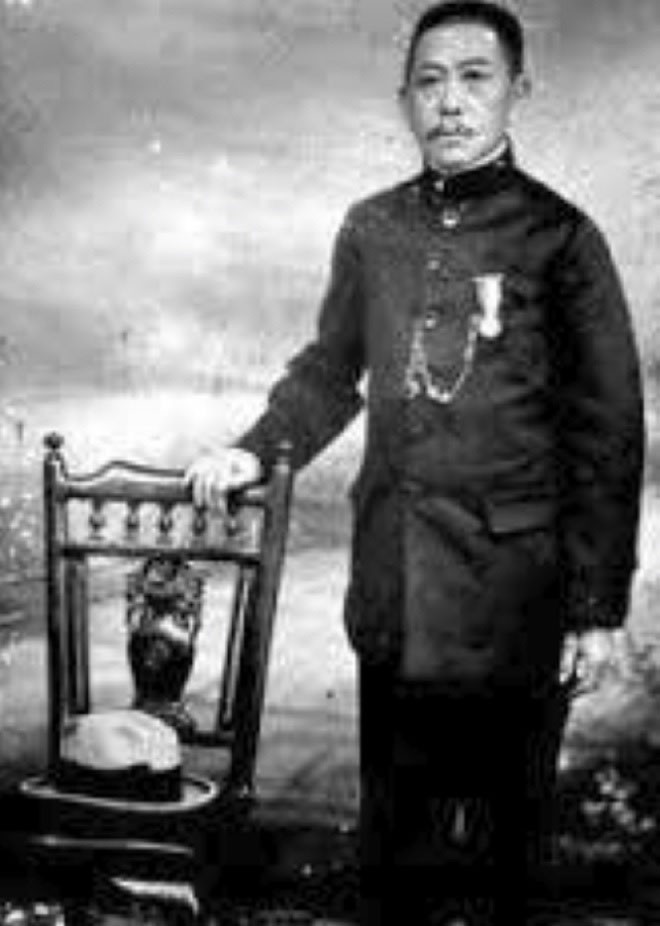 |
| Vuong Chi Sinh, the "Cat King" |
The word "Cat" comes from the old name "Cat people" in some documents and previous calls; are currently not used in official documents, replaced by Hmong/H'Mong people.
In Ha Giang, this title is often associated with Vuong Chinh Duc – a person who holds power and economic power in the Sa Phin region, described by the community and many sources as a "border lord" in times of upheaval.
The mansion of the Vuong family (Sa Phin) is a place associated with the story of the "Cat King": both a place to live, a defense and a symbol of power at one time.
After Vuong Chinh Duc, his son Vuong Chi Sing (Vuong Chi Thanh) is recorded as having a period of participating in the revolution and holding the role of elected deputies in the early years of the State of the Democratic Republic of Vietnam (as mentioned in the article).
Tin mới hơn


Tin khác


