Vietnam Has the First Two Craft Villages in the World Network of Creative Craft Cities
OVN - On the evening of February 14, at the Imperial Citadel of Thang Long (Hanoi), the ceremony to welcome Bat Trang ceramics and Van Phuc silk weaving villages as members of the World Network of Creative Craft Cities was held. The event also included activities to display, demonstrate, and create Hanoi handicraft products in 2025.
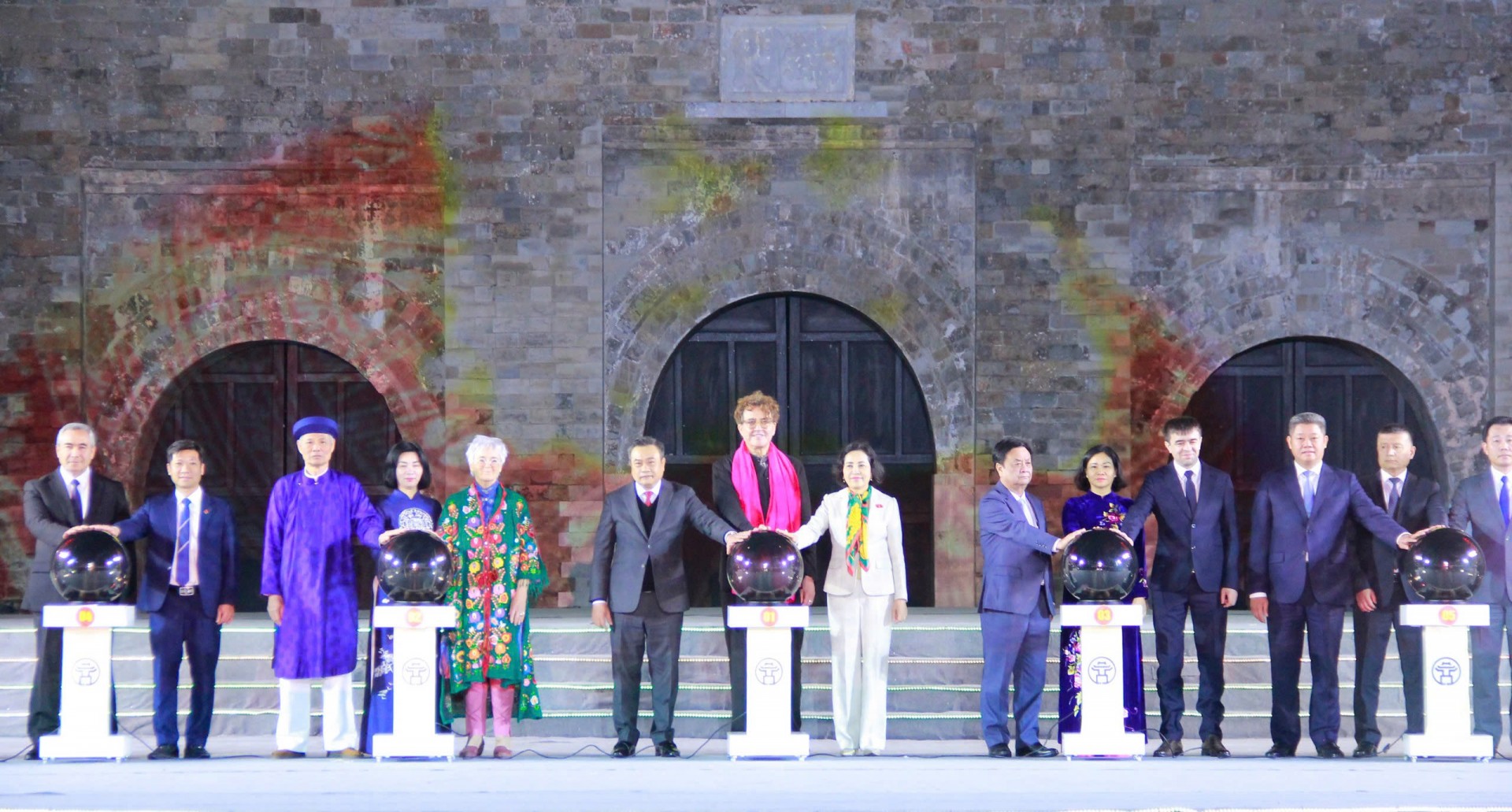
Các đại biểu thực hiện nghi thức khai mạc sự kiện trưng bày, trình diễn, tạo tác sản phẩm thủ công mỹ nghệ Hà Nội năm 2025.
Delegates perform the opening ceremony of the event displaying, demonstrating, and creating Hanoi handicraft products in 2025.

The event was attended by Ms. Nguyen Thi Thanh, member of the Party Central Committee, Vice Chairwoman of the National Assembly; Mr. Le Minh Hoan, member of the Party Central Committee, Minister of Agriculture and Rural Development; Mr. Tran Sy Thanh, member of the Party Central Committee, Chairman of the Hanoi People's Committee, Mr. Sa'ad al-Qaddumi, Chairman of the World Craft Council, along with leaders of ministries, departments, central and Hanoi sectors as well as international organizations

Symbol of endless creativity.

Speaking at the ceremony, Mr. Nguyen Manh Quyen, Vice Chairman of the Hanoi People's Committee, said that Hanoi is the place with the largest number of craft villages and artisans in the country, with 1,350 craft villages and villages with crafts, converging 47/52 traditional crafts of the country. Each craft village has its own identity, with unique products in the local cultural style; highly competitive in the domestic and international markets, notably ceramic products, weaving, embroidery, lace, wooden handicrafts, and agricultural processing...
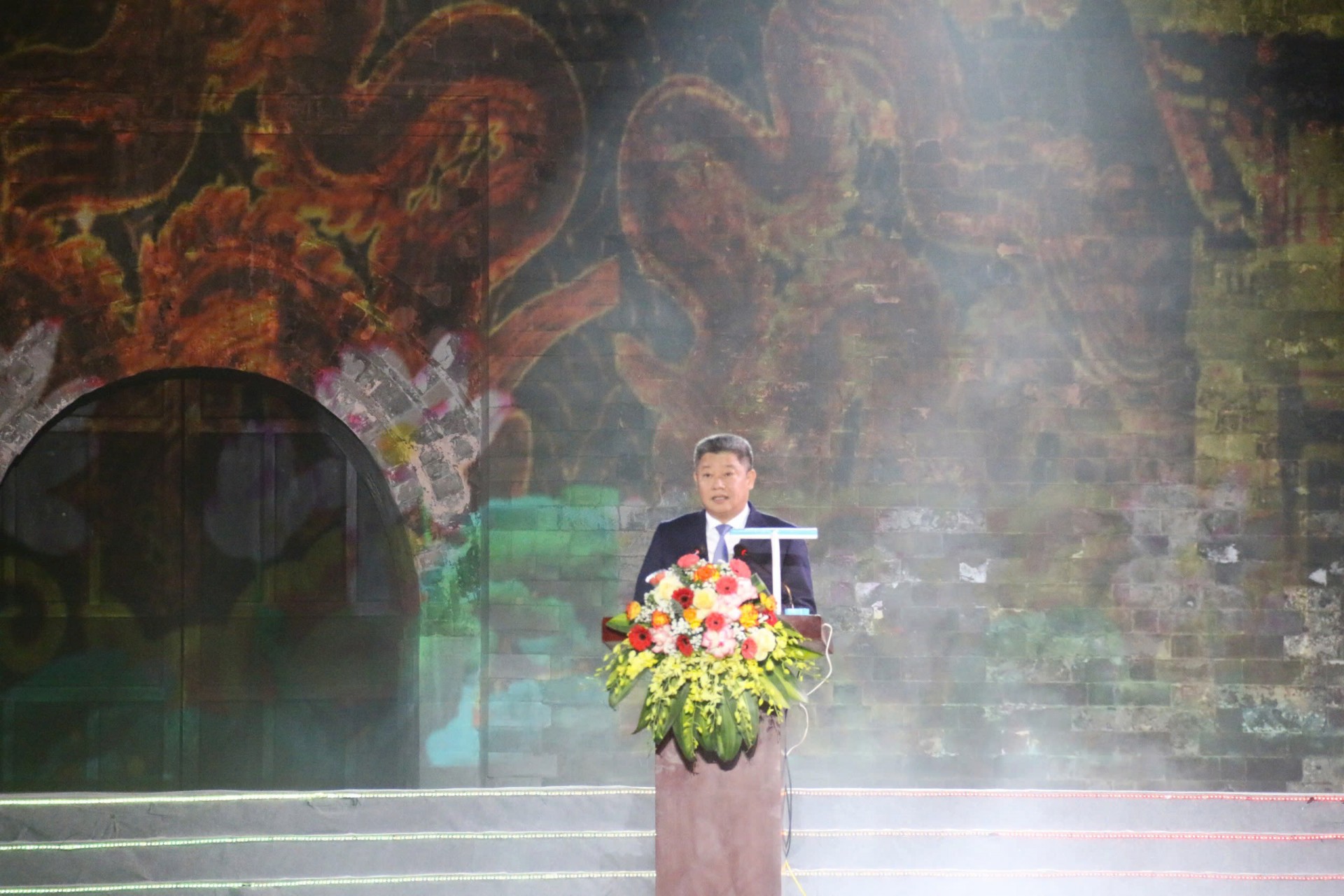
Mr. Nguyen Manh Quyen, Vice Chairman of Hanoi People's Committee spoke at the event

The two craft villages of Bat Trang and Van Phuc are not only symbols of traditional Vietnamese crafts but also creative works of art, crystallized from the talent and dedication of artisans and skilled workers.

To date, the world has 68 craft villages in 28 countries recognized as members of the World Network of Creative Craft Cities. The recognition of Bat Trang ceramics and Van Phuc silk weaving villages as members of the World Craft Cities Network by the World Craft Council is both a source of pride and a testament to the efforts to preserve and promote traditional values while meeting the needs of the times. The Vice Chairman of the Hanoi People's Committee emphasized that in the coming time, Hanoi is committed to continuing to cooperate with international organizations, especially the World Craft Council, to promote further the quintessence of Hanoi's crafts as well as effectively carry out the work of preserving and promoting the values ​​of the capital's craft villages.

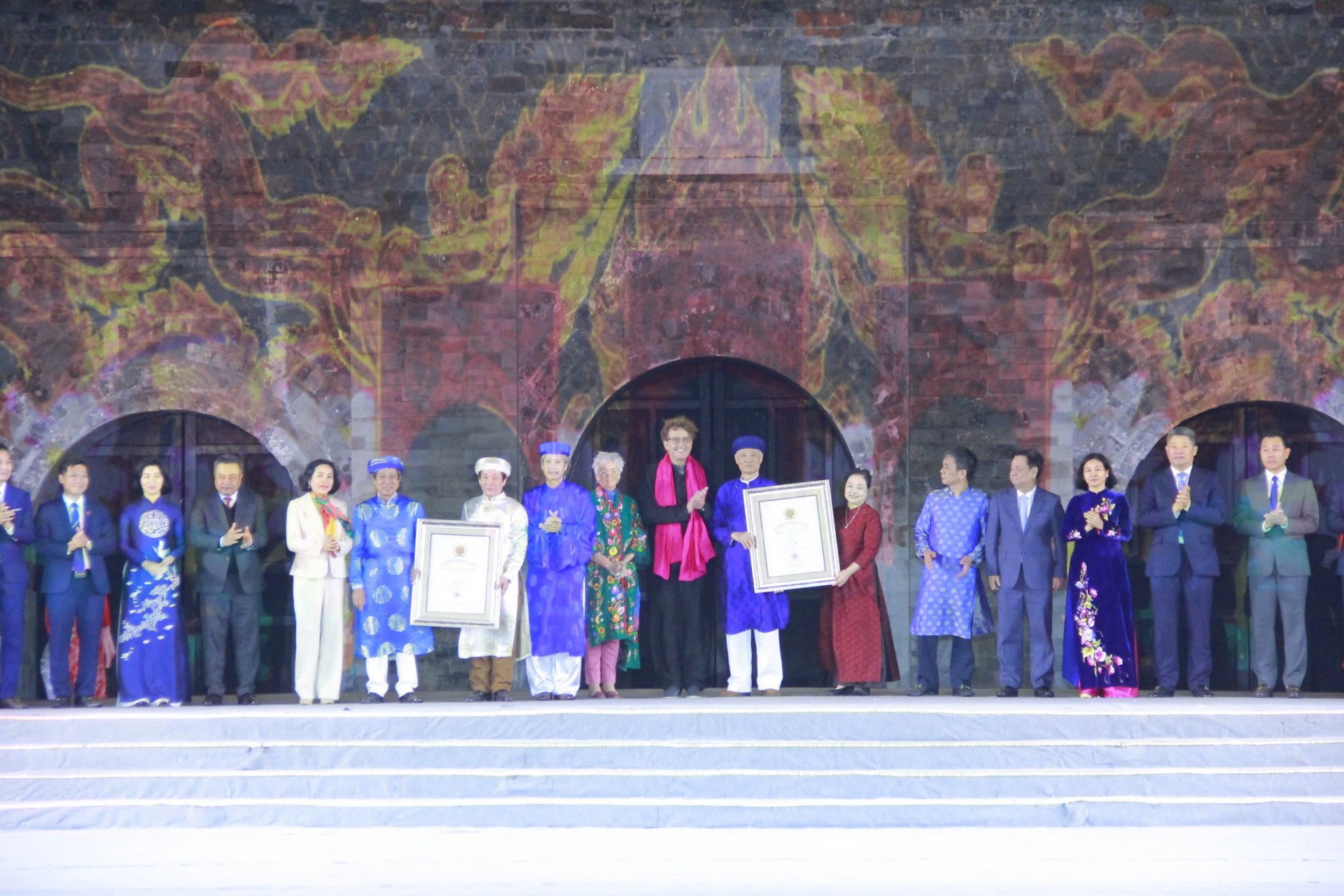
Awarding certificates to the two craft villages of Bat Trang Ceramics and Van Phuc Silk Weaving as members of the World Network of Creative Craft Cities

Bat Trang is not only the cradle of Vietnamese ceramics but also a symbol of endless creativity. Bat Trang is famous for its pottery-making craft over 500 years ago. With extensive experience and creativity, ceramic artisans have restored ceramic models from ancient times such as the Ly, Tran, Le, and Mac dynasties... Bat Trang ceramics are made from extremely meticulous and precise glaze and kiln firing techniques, bringing harmony in both the shape and color of the ceramic, and is where traditional and modern ceramics of Vietnam intersect. Ceramic products are not only sophisticated in form but also diverse in design, thereby increasingly attracting the attention of domestic and foreign consumers. About Van Phuc silk weaving village, which has a history of thousands of years, artisans have preserved and developed the art of silk weaving, with silk sheets that are not only beautiful in color but also sophisticated in every line and pattern. Van Phuc Silk Weaving Village is becoming a famous tourist and sightseeing destination in the capital for visitors to explore and learn about traditional beauty.

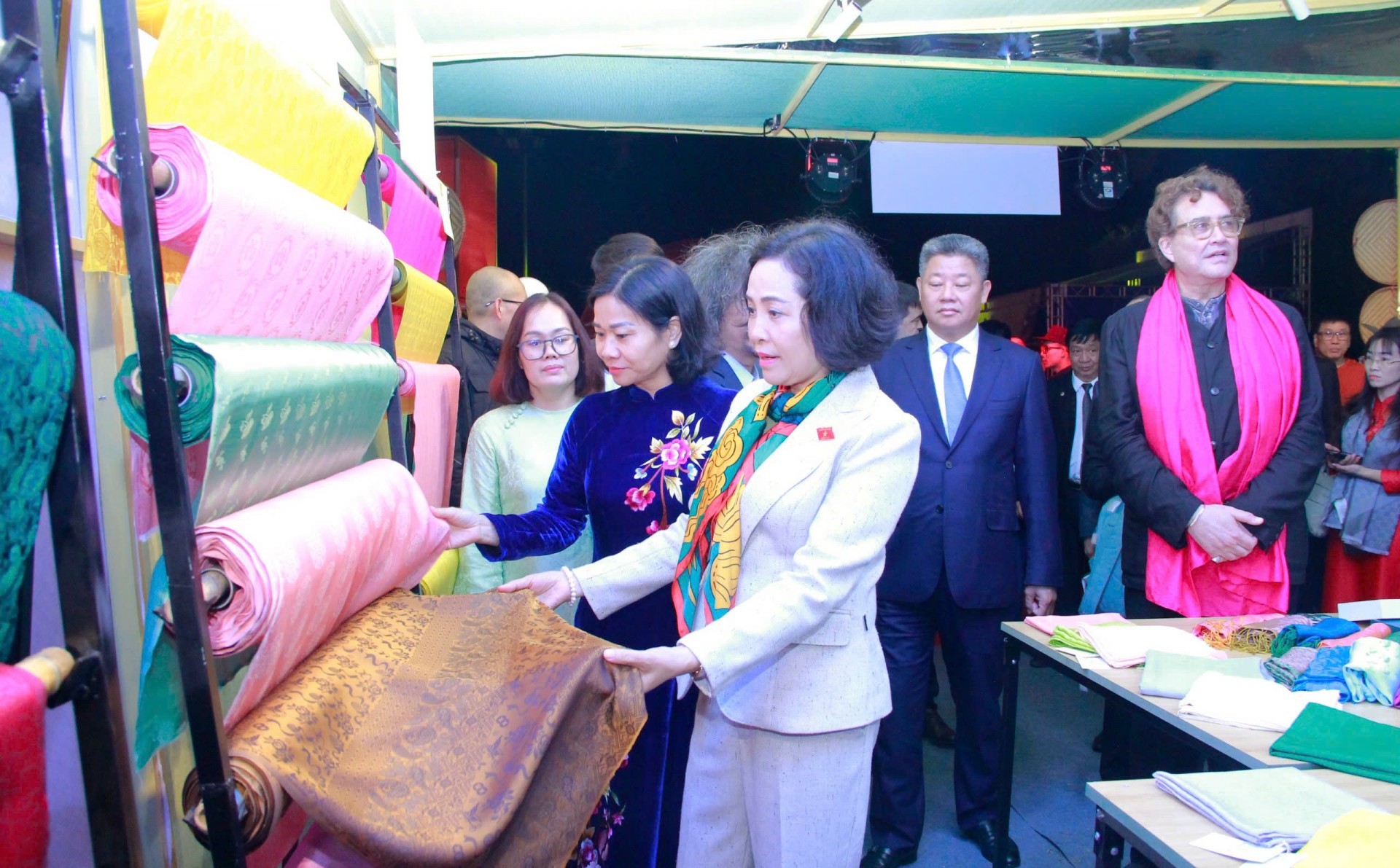
Many exquisite ceramic products were displayed at the event.

Mr. Nguyen Xuan Dai, Director of the Hanoi Department of Agriculture and Rural Development, informed that in 2025, the Hanoi Department of Agriculture and Rural Development aims to propose the World Craft Council to recognize at least 2 more craft villages as creative craft cities of the world.

On the side of the Hanoi Department of Agriculture and Rural Development, the important role of craft villages has been identified, thereby advising the City People's Committee to issue a Master Plan for developing craft villages in Hanoi for the period 2024 - 2030, with a vision to 2050, with 6 key task groups and 11 solution groups.

A clear demonstration of the Vietnamese people's perseverance and resilience

At the ceremony, Mr. Saad al-Qaddumi, President of the World Craft Council, assessed that Vietnam, especially traditional craft villages in Hanoi, have long been famous for their sophisticated handicraft products, preserved and developed over many centuries. From the exquisite ceramic products of Bat Trang to the soft silk of Van Phuc, these are not only a means of livelihood, but also vivid symbols of the culture, creativity, and resilience of the Vietnamese people."

The President of the World Craft Council emphasized: "Although Vietnamese craft villages have gone through countless challenges, ups, and downs of history and faced the risk of extinction like many other craft communities in the world, we have witnessed a strong revival and development, a clear demonstration of the Vietnamese people's perseverance and resilience."

ô

According to Mr. Saad al-Qaddumi, over the past 40 years, the Vietnamese government has always paid attention and invested in restoring and developing traditional industries, including Van Phuc silk and Bat Trang ceramics. These efforts have not only helped revive sophisticated handicrafts but also created many new opportunities, especially for women, helping them participate in the economy and continue to preserve cultural identity for future generations.

Many exquisite ceramic products were displayed at the event.
According to Mr. Saad al-Qaddumi, over the past 40 years, the Vietnamese government has always paid attention and invested in restoring and developing traditional industries, including Van Phuc silk and Bat Trang ceramics. These efforts have not only helped revive sophisticated handicrafts but also created many new opportunities, especially for women, helping them participate in the economy and continue to preserve cultural identity for future generations.

“Today, Bat Trang and Van Phuc are symbols of revival and strong development. The story of these two craft villages is a clear testament to the resilient spirit of the community, showing that despite the many difficulties they have faced, they have been able to rise up and once again become the center of handicrafts and cultural pride. In honoring these two craft villages today, we also acknowledge the determination and efforts of the Vietnamese people, who have not only preserved their cultural identity but also brought traditional crafts to new heights on the world map,” affirmed Mr. Saad al-Qaddumi.

Source: Vietnam Business Forum

Thanh Hậu

Tin liên quan

Tin mới hơn

Cao Bang develops an area of organic agricultural raw materials for export to Europe
Through a strategic cooperation mechanism with international distribution groups, Cao Bang province is drastically standardizing the area of indigenous spices and medicinal materials. The application of the most stringent organic standards globally paves the way for highland agricultural products to penetrate deep into the billion-dollar supply chain of the European (EU) market.
Keep the smell of flowers in the drops of Cao Bang honey
Exploiting diverse vegetation in natural forests in Bach Dang commune (Cao Bang province), Binh Duong Natural Flower Honey products have successfully transformed from a distributed harvesting method to a value chain organization model. 3-star OCOP certification paves the way to bring indigenous specialties to professional distribution channels.
U Minh honey: Sweet drops from the southern melaleuca forest
ocopvietnam - In the midst of the vast melaleuca forests of U Minh Thuong (Kien Giang), the profession of bee guard has existed for many generations as a way for people to live in harmony with nature. From the drops of honey distilled in the middle of the melaleuca season, the people here are gradually elevating indigenous products into OCOP products, both creating sustainable livelihoods and contributing to preserving the typical wetland ecosystem of the South.
About the land of Bau Da: Following the traces of drunkenness, discovering the hundred-year-old wine village and the soul of the land of martial arts
OVN - In the midst of the peaceful An Nhon Tay region, where the red soil is sunny and windy embracing the memories of many generations, Bau Da wine village appears as a unique cultural slice. There, every drop of wine is not only a drink, but a crystallization of earth, water, fire and lifelong secrets, encapsulating the soul of the countryside in a spicy taste that is rare anywhere else.
Tra Bong cinnamon flavor - gently spreading, elevating the 4-star OCOP product
OVN - From the mountainous region of Tra Bong (Quang Ngai), where the scent of cinnamon creeps into every way of life, the rustic cinnamon incense sticks are quietly reaching out, carrying the story of identity, preservation and aspiration for sustainable development of the highland people.
'Garden of Eden' in the middle of Moc Chau Plateau
OVN - Among the familiar destinations of Moc Chau (Son La) tourism such as Bach Long glass bridge, Dai Yem waterfall or Vat Hong pagoda relic, some tourists choose to stop at experiential farm models. Here, instead of visiting large-scale works, visitors have more options to walk in the farming space, learn how to grow crops and enjoy agricultural products in the garden.

Tin khác

Creating livelihoods for indigenous women from... Loofah
OVN - In the Cao Son mountains, when the melon season passes, on the wooden fences and the eaves of stilt houses, there are often a few dried old melons left. For many years, people have only kept it for breeding, or stripped the fibers to wash dishes. No one thought that this rough material would one day become an art painting, a handbag or a souvenir for tourists.
Vuong Family Mansion: Legend in the Stone Plateau
OVN - The summer sun spilled over into the Sa Phin valley in the old Ha Giang province (now Tuyen Quang province), covering the yin and yang tile roofs that had faded over time.
Ca Mau: Traditional professions that hold the soul of the earth at the end of heaven
OVN - At the bottom of the map of Vietnam, where the land touches the sea and the melaleuca forest embraces the salty, sweet rivers, Ca Mau is not only known for its special ecosystem, but also for the traditional craft villages that have formed, existed and developed with the history of exploitation of this land.
From rustic food to high-value goods
OVN - From rustic dishes attached to people's daily meals, many specialties of Thanh Hoa such as shrimp paste, Ai village sauce, bamboo shoots, thorn cakes or lam tea... are gradually stepping out of the village space to become high-value commodity products.
Arabica Son La: Building a coffee brand from the green value chain
OVN - From the largest raw material area in the country, Son La Arabica is entering a new stage of development. In the global trend of sustainable consumption, product provenance and environmental responsibility, coffee brands are no longer determined by taste alone, but also by the story behind each coffee bean. Therefore, Son La is choosing the path of building a brand from the green value chain.
Cu do Ha Tinh - When molasses, lac rang tells the story of the village
OVN - In the midst of the sunny and windy Central region, where the land is harsh but the people are rich in energy and sophistication, Cu Do candy was born as a testament to the way Ha Tinh people distill each simple ingredient to create an unmistakable taste. From a rustic hometown gift, today's cu do is stepping out of the village space, becoming an OCOP product with bold cultural imprints and clear economic potential.
Thai people in Dien Bien keep the culinary soul with OCOP products
OVN - From the simple ingredients of the mountains and forests of the Northwest, the Thai people in Dien Bien have created dishes with their own flavors that cannot be mixed. Over time, specialties that were only present in family meals have now been standardized, branded and put on the OCOP "passport". It is not only a story of raising the level of local products, but also a journey to bring national cultural identity to a wider market.
10,000 hands connected: A Vietnamese record from the heart of the Northwest
In the middle of the first days of the new year, by the deep blue Da Giang river, Muong Lay burst into a bustling summer festival atmosphere. The hands clenched together, the endlessly extended circles like the flow of culture never rested. It is not only a record, but a declaration of the solidarity of 19 ethnic groups on the land of Dien Bien.
Sung village: Weaving brocade, weaving livelihoods for Dao Tien women
OVN - In Sung hamlet, Cao Son commune, Dao Tien brocade sheets are not only a cultural identity but also a stable source of livelihood for 12 women, including people with disabilities and difficult circumstances. From a traditional profession that once faced the risk of death, the Dao Tien brocade cooperative group (THT) has been "revived" thanks to its association with community tourism, bringing in hundreds of millions of VND in revenue per year.
Hoa dã quỳ Điện Biên: Tiềm năng OCOP từ mỏ vàng chưa được khai phá
OVN - Những triền đồi Điện Biên khoác lên mình sắc vàng rực rỡ của hoa dã quỳ. Vẻ đẹp thiên nhiên ấy không chỉ dừng lại ở ngắm nhìn, mà đang mở ra cơ hội lớn để Điện Biên phát triển chuỗi sản phẩm OCOP từ du lịch cộng đồng, sản phẩm chế biến đến dịch vụ trải nghiệm.
Công nghệ cao: Cuộc đại chuyển mình của nông nghiệp Sơn La
OVN - Không còn là những mùa vụ phụ thuộc hoàn toàn vào nắng mưa, nông nghiệp Sơn La đang vận hành bằng nhà màng, dây chuyền chế biến và các quy trình kỹ thuật chuẩn hóa. Hành trình chuyển mình từ canh tác truyền thống sang sản xuất ứng dụng công nghệ cao gắn với công nghiệp chế biến đã tạo nên một diện mạo hoàn toàn mới cho kinh tế nông nghiệp nơi đây. Sự chuyển mình ấy không đến trong một sớm một chiều. Nó bắt đầu từ những chủ trương lớn, từ các nghị quyết được cụ thể hóa bằng quy hoạch, cơ chế và nguồn lực. Khi chính sách mở đường, công nghệ đã có lối để đi vào ruộng đồng.
Phú Thọ: Khi hợp tác xã “lên đời” nhờ số hoá
Trong dòng chảy của kinh tế số, chuyển đổi số không còn là câu chuyện dành riêng cho doanh nghiệp lớn. Ở khu vực nông thôn, nhiều hợp tác xã nông nghiệp tại Phú Thọ đang cho thấy khi tư duy thay đổi, công nghệ có thể trở thành đòn bẩy giúp mô hình sản xuất truyền thống bứt phá mạnh mẽ.
OCOP Lào Cai chuyển mình với tư duy xanh và thương mại số
Không còn dừng ở câu chuyện “mỗi xã một sản phẩm”, Lào Cai đang đặt tham vọng lớn hơn cho chương trình OCOP: biến nông sản bản địa thành hàng hóa có sức cạnh tranh bằng tư duy xanh, công nghệ số và chuỗi giá trị bền vững. Từ những vùng chè trên núi cao, những cơ sở chế biến dược liệu, mật ong, miến đao hay thổ cẩm của đồng bào dân tộc… tất cả đang được đưa lên sàn thương mại điện tử, truy xuất nguồn gốc bằng mã số, mã vạch và bước vào cuộc chơi mới của thị trường hiện đại.
Cánh đồng ‘lên sóng’: Điện Biên đưa nông sản bản địa lên ‘chợ số’
Giữa cái nắng đầu hè phủ lên cánh đồng ở xã Thanh An (Điện Biên), những ruộng khoai vừa vào vụ thu hoạch bỗng trở thành nơi diễn ra một “phiên chợ số” đặc biệt. Xen giữa màu đất đỏ và những sọt nông sản mới nhổ là ánh đèn livestream, tiếng chào bán hàng rộn ràng cùng sự xuất hiện của các TikToker, KOL, KOC nổi tiếng. Lần đầu tiên, những người nông dân vốn quen với ruộng đồng, cuốc xẻng lại cùng các nhà sáng tạo nội dung đứng chung một khung hình để kể câu chuyện về nông sản Điện Biên theo cách hoàn toàn mới.
Chương trình OCOP Quảng Trị thúc đẩy phát triển nông thôn
LVN - Sau 6 năm, thực hiện chương trình mỗi xã một sản phẩm (OCOP) tỉnh Quảng Trị có 372 sản phẩm, nâng cao chất lượng, mở rộng thị trường trong và ngoài nước thúc đẩy xây dựng nông thôn mới.
Tin mới Đọc nhiều
Giao diện di động